
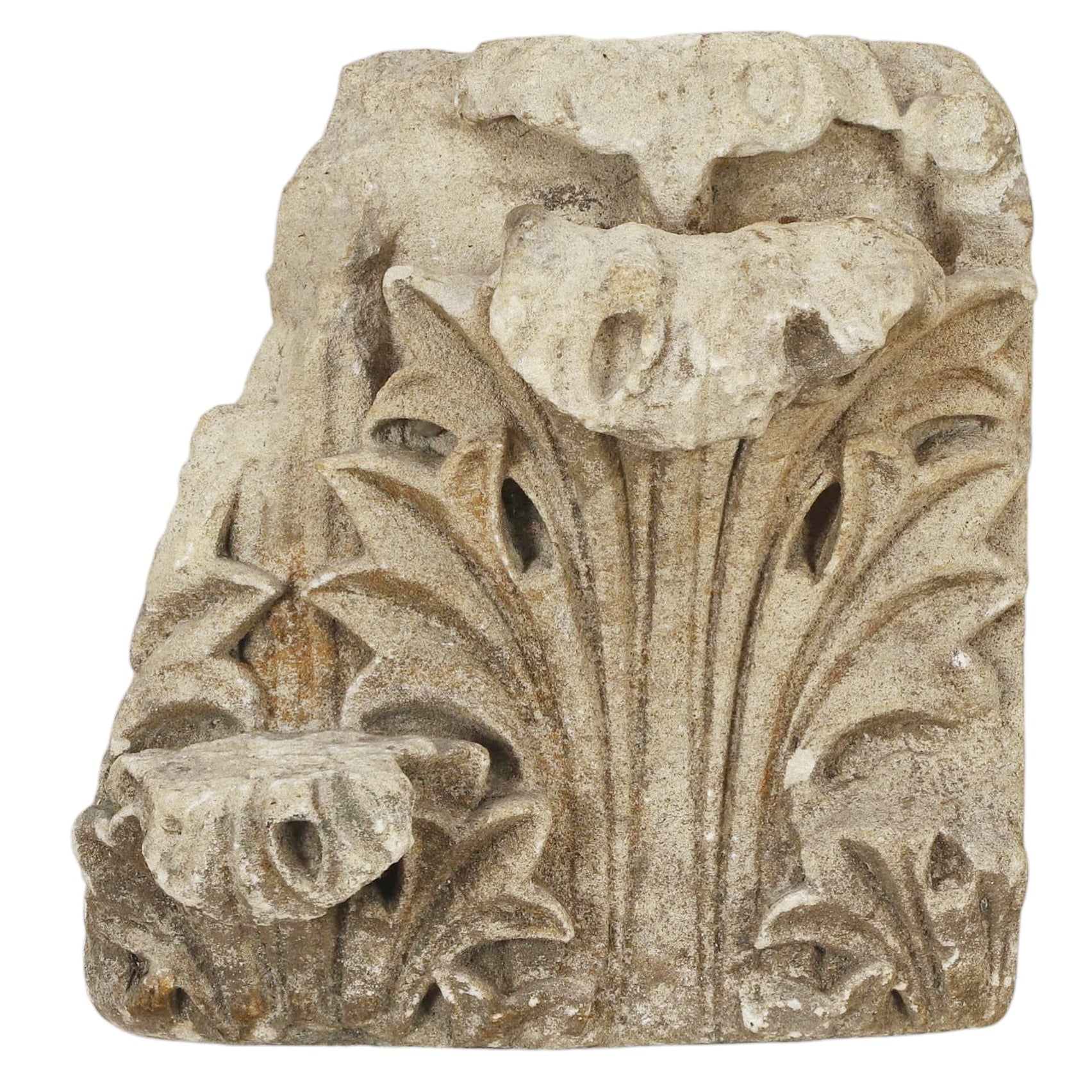
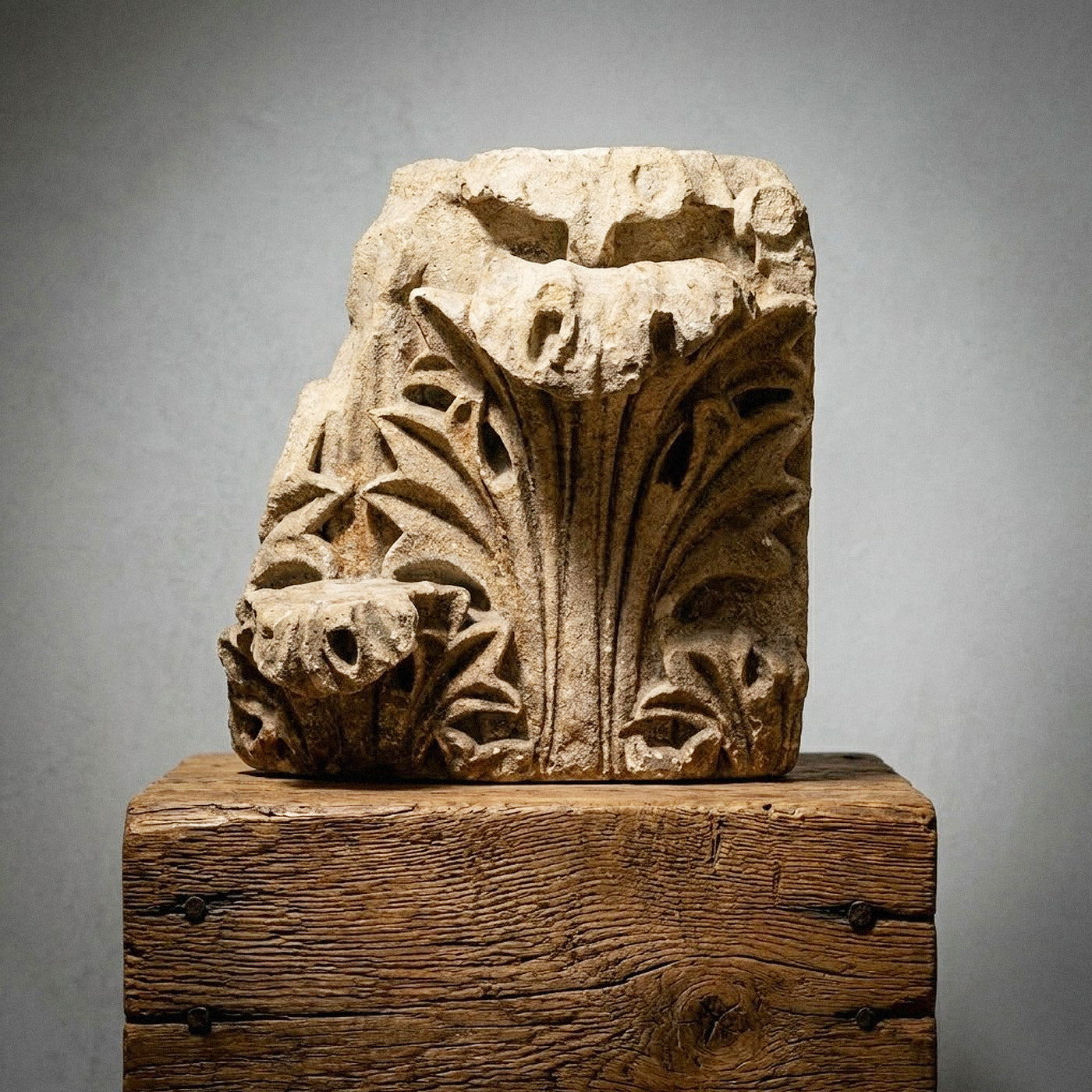
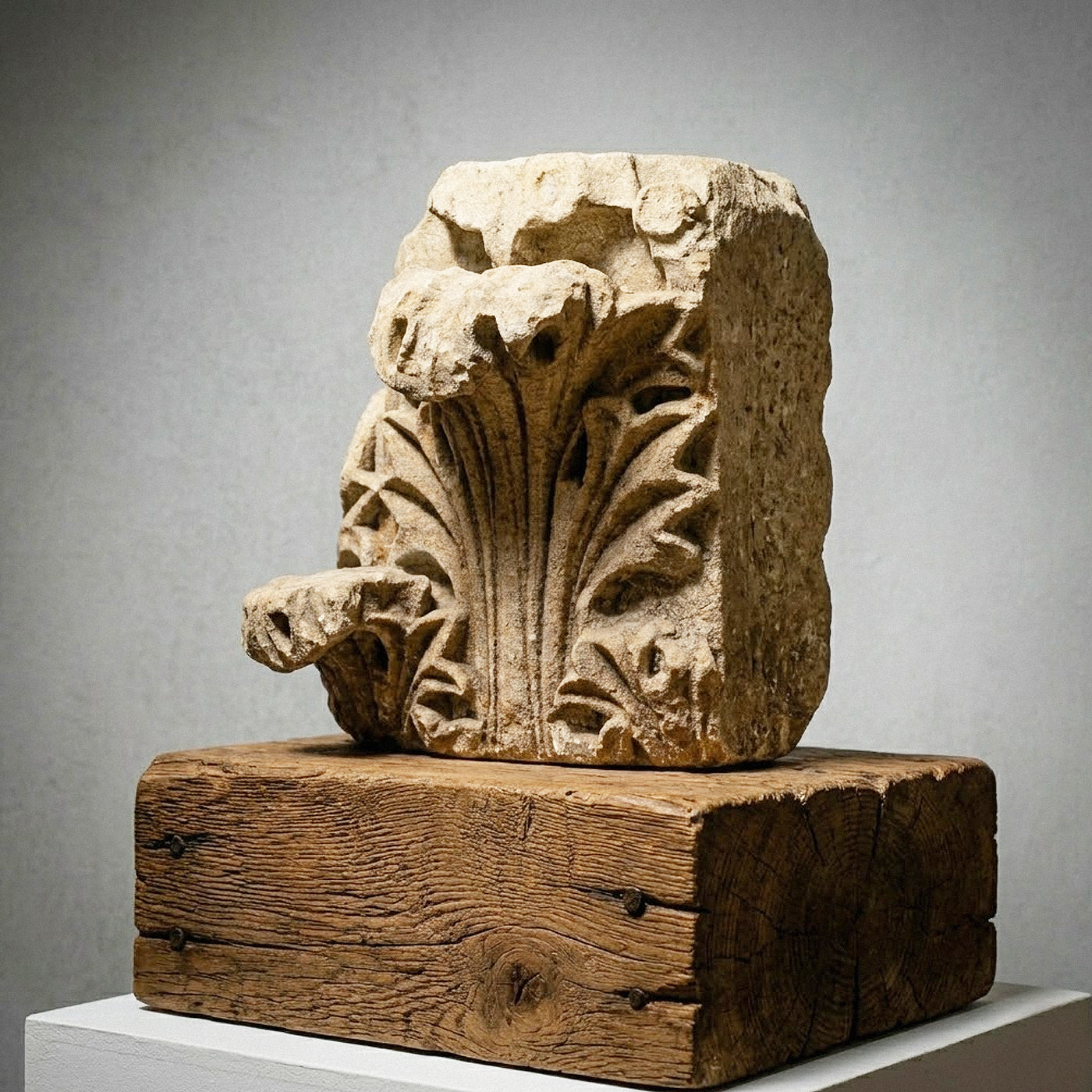
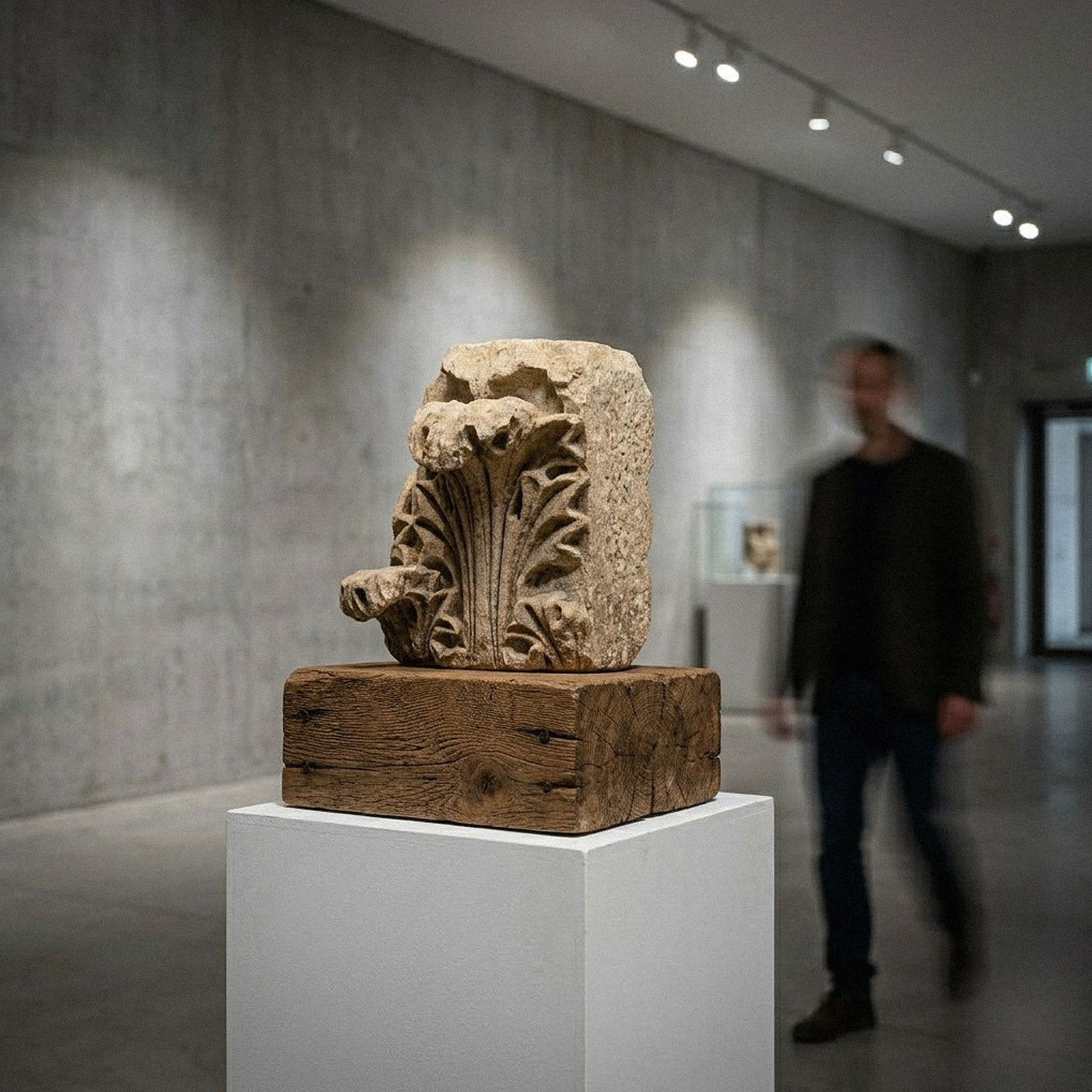
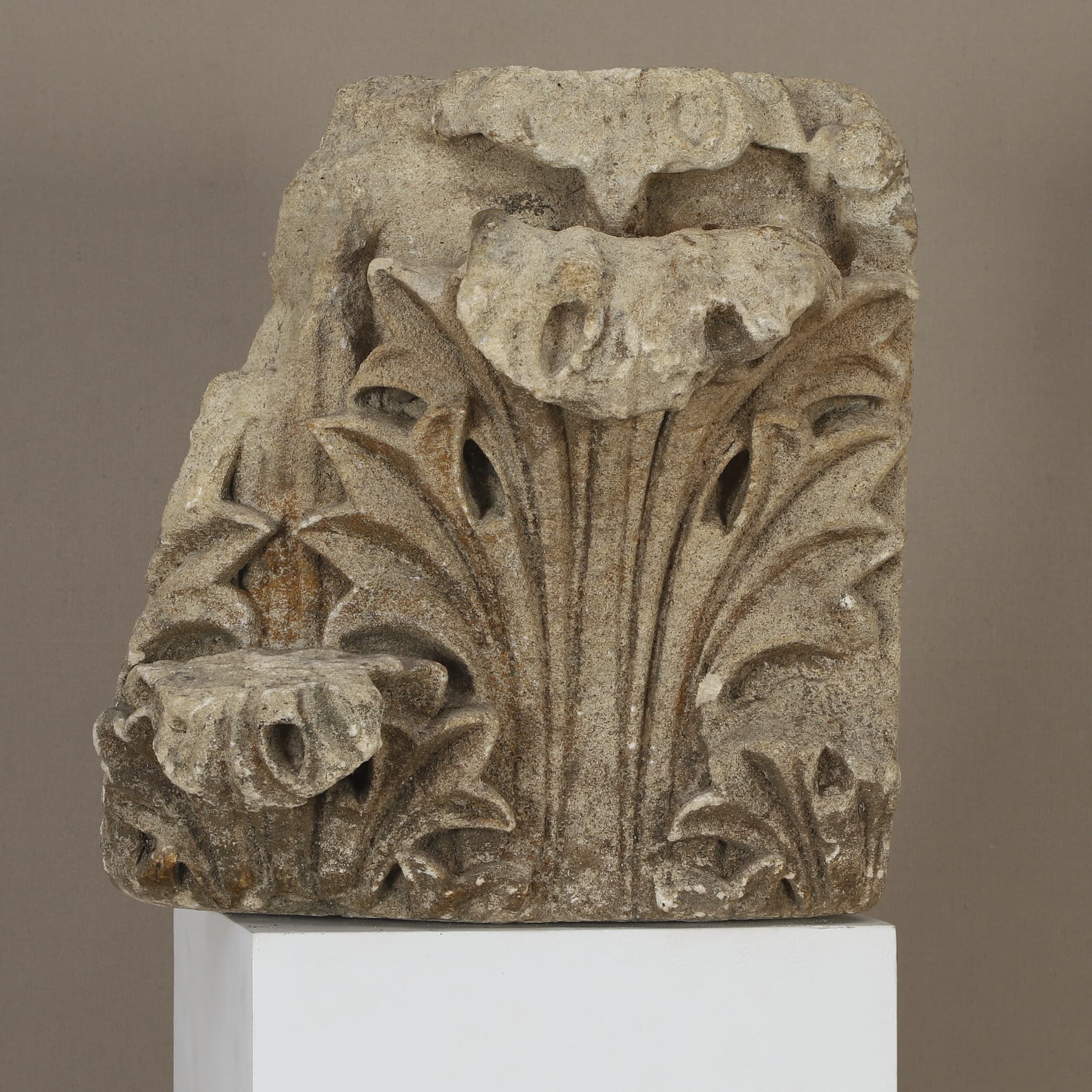
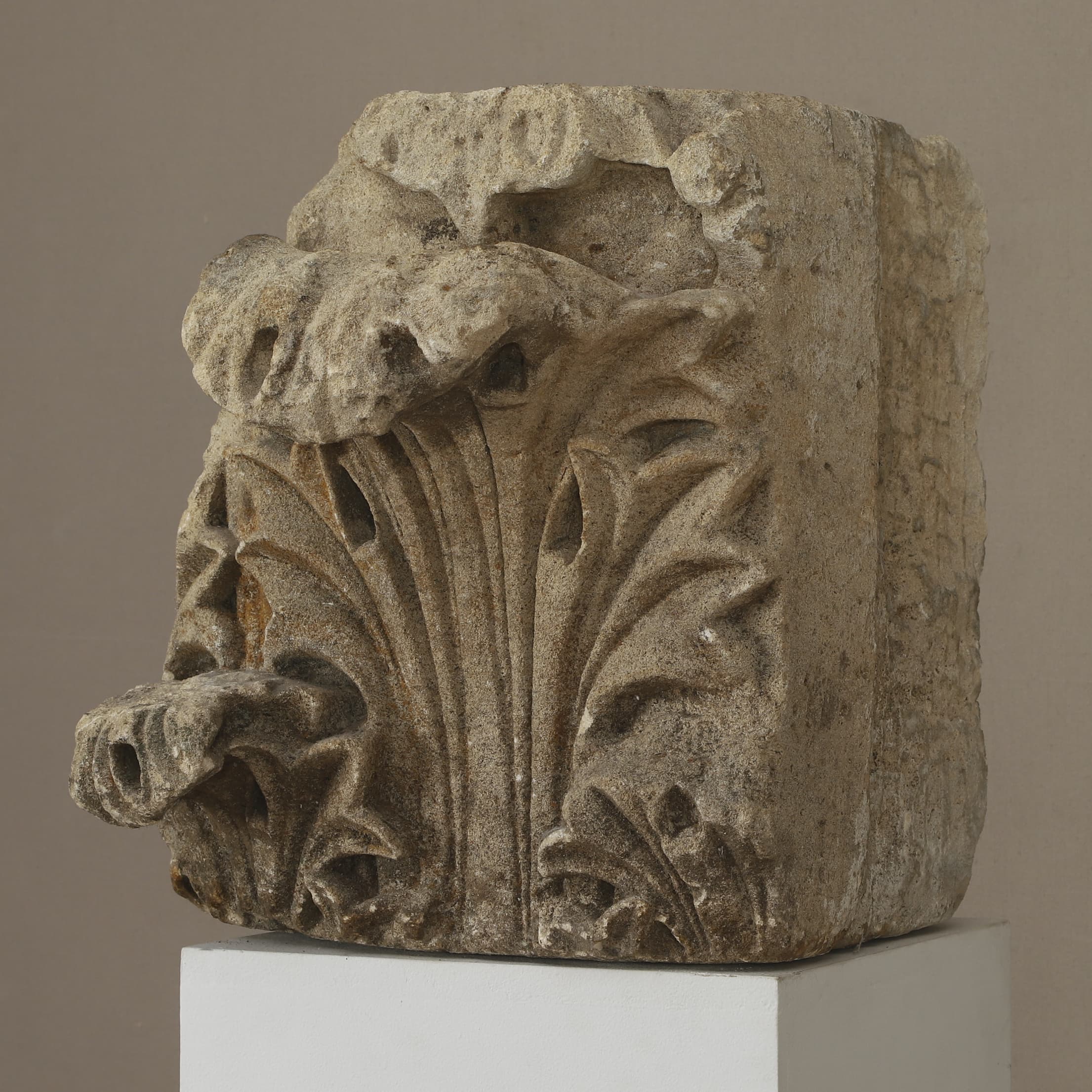
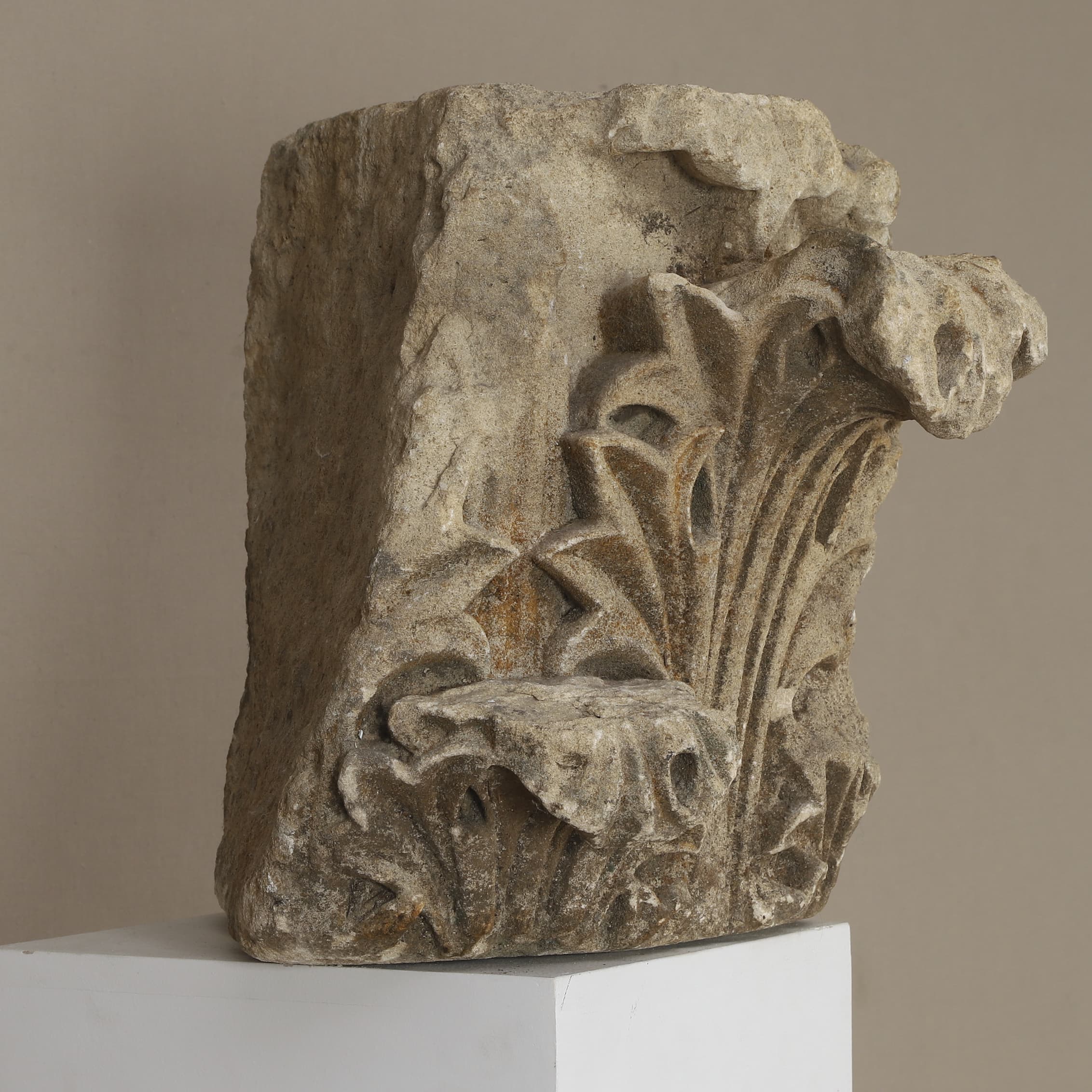
13th century French Gothic Limestone Capital Fragment
Carved during the height of the French Gothic era, this remarkable limestone fragment—once an engaged capital—embodies the profound mastery of 13th-century masonry. Hewn from the brilliant white quarries of the Seine Valley, the deeply undercut, "wind-blown" acanthus leaves showcase the celebrated "Rouen Style," an artistic movement that daringly transformed heavy, unyielding stone into an illusion of fragile, organic nature.
For the discerning collector or design professional, this fragment transcends its status as an architectural remnant; it is a profound anchor of antiquity. Its deeply weathered, sculptural presence effortlessly grounds modern, curated interiors with the quiet gravity of the medieval world. It offers a tangible, emotional connection to centuries of European history, inviting a conscious appreciation for the enduring beauty of heritage craftsmanship.
Specifications:
Origin: Rouen, France (Seine Valley)
Period: 13th - 14th Century
Style: French Gothic (Rayonnant)
Material: Carved white limestone
Dimensions: 15 1/8" (h) x 14 3/8" (w) x 16 1/2" (d) / Weight: 44 lbs
Condition: Authentic antique condition. The limestone exhibits natural, deep weathering and fragmentation, possessing a rich, centuries-old patina indicative of both its original architectural placement and its historical transition into an outdoor garden element.
Delivery: Please inquire.
Historian’s Note:
This fragment serves as a magnificent dual-historical record. Originally positioned in a grand ecclesiastical structure in the heart of Rouen—perhaps the Abbey of Saint-Ouen or the Cathedral's North Transept—it was designed to be viewed from below, where deep shadows cast by the master carver's drill gave the foliage a hovering, mid-air vitality. Following the upheaval of the French Revolution, when structures like the nearby Church of Saint-Herbland were systematically dismantled, these stones were scattered.
It became fashionable for the bourgeoisie to rescue this medieval debris to ornament their country estates. This specific piece was relocated to the quiet heights of Bois-Guillaume, resting on the property of M. Sennegon. There, in the early 1820s, the fragment sat in the very grass where Sennegon's brother-in-law, the legendary painter Jean-Baptiste Camille Corot, shaped his early Romantic landscape vision. Having survived the collapse of the medieval order, this stone remains a rare, physical intersection of supreme 13th-century craftsmanship and the birth of modern fine art.
Choose options