
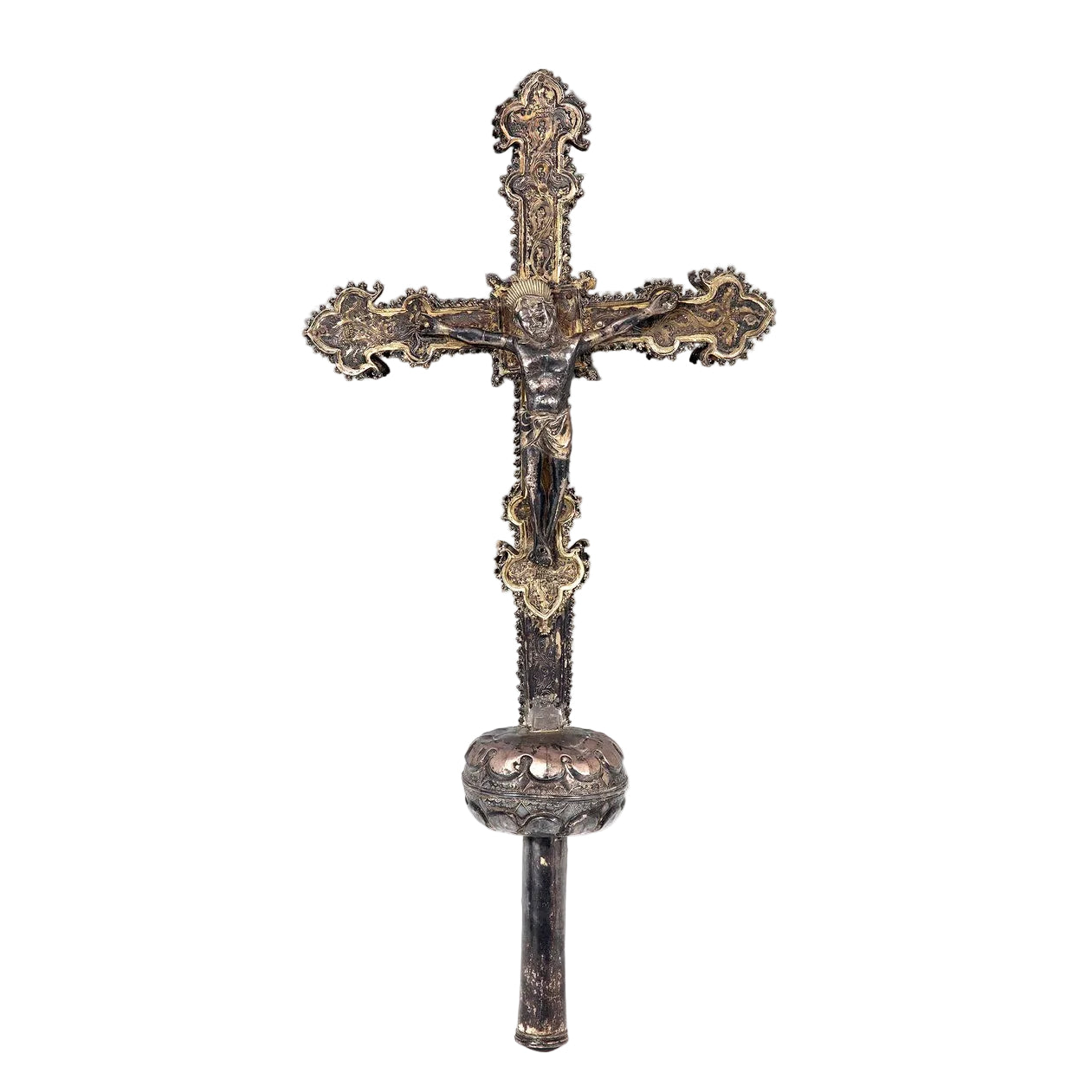


16th C. Spanish Gothic Silver Processional Cross
To stand before this 16th-century Spanish processional cross is to encounter the profound gravity of the European Renaissance. Hand-chased in solid silver, this cross was once the literal and spiritual vanguard of liturgical processions, leading the faithful through the cathedrals of Old Castile. It is a masterpiece of Gothic transition, where the soaring verticality of the medieval era meets the refinement of the late Gothic era.
The craftsmanship is staggering. Every inch of the silver surface is alive with intricate chasing, featuring delicate architectural tracery, quatrefoil medallions, and the hauntingly beautiful central figure of the Crucified Christ. The reverse may have once revealed the Lamb of God or a patron saint, ensuring the object radiated divine power from every angle. Its weight and scale command a room, acting as a sculptural anchor that transforms a modern interior into a space of historical sanctuary.
For the cultural collector or the visionary interior designer, this cross is more than an artifact; it is an intellectual asset. It brings a "settled purpose" to a private gallery or library, serving as a silent witness to centuries of European history. It is a testament to the Le Historique ethos: curating objects that are not simply old, but are profound survivors of the human spirit.
Specifications:
Origin: Barcelona, Spain
Period: 15th Century (ca. 1400–1425)
Style: Gothic Transition / Spanish Renaissance
Material: Solid silver (often over a wooden core for structural integrity); hand-chased and repoussé.
Dimensions: 67 (h) x 31 (w) x 12 (d) cm
Condition: Antique condition. The silver retains a deep, authentic patina that only centuries of air and ritual handling can produce. Minor age-appropriate wear to the high points of the chasing. The wooden core is probably a later replacement. The stem and knop are likewise a later addition, affixed with soldered lead.
Historian’s Note:
In the 15th-16th century, Spain was the silver capital of the world, fueled by the riches of the New World and the peerless skill of the Plateresco (silversmith-style) artisans. A processional cross of this caliber was a massive financial undertaking for a parish, often taking years to complete. These crosses were designed to be seen from a distance, shimmering in candlelight or the bright Spanish sun. They represent the "Golden Age" of Spanish metalwork, a period where the artistry of the silversmith was considered equal to that of the painter or architect. To find a complete example today, outside of a cathedral treasury or a museum like the Prado, is an exceedingly rare opportunity for a private steward.
Choose options