
17th Century Italian Baroque Giltwood Cassetta Mirror
This 17th-century North Italian mirror represents the height of late Baroque craftsmanship, bridging the gap between architectural rigor and the burgeoning grace of the Proto-Rococo.
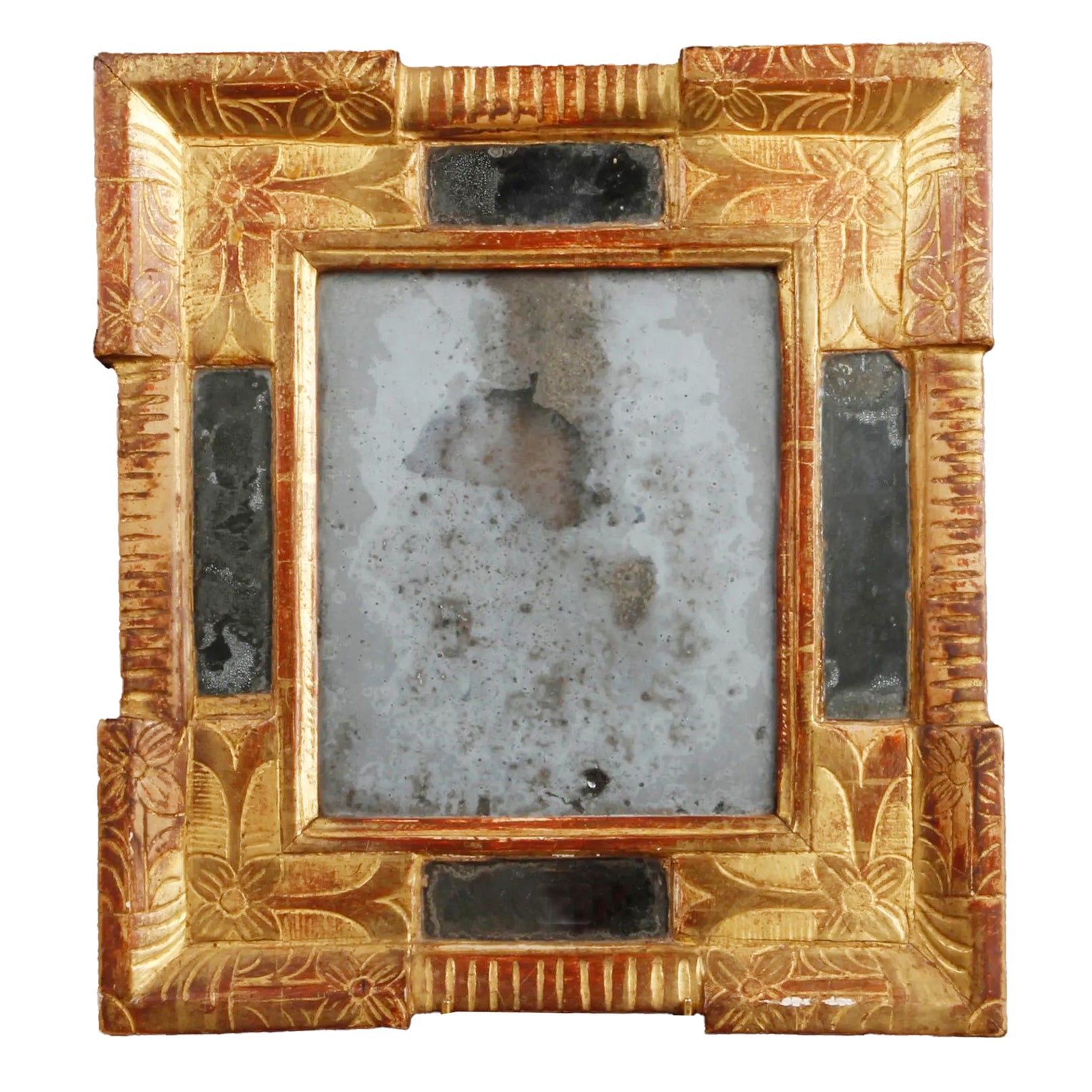
Hand-carved in North Italy (likely Venice or Florence) between 1670 and 1690, the frame is a superb example of the cassetta or tabernacle style. The wood is finished in genuine gold leaf over a deep red bole ground. Over three centuries, the gold has softened, allowing the vibrant warmth of the red bole to emerge in a natural, earned patina that serves as a signature of its age and authenticity.
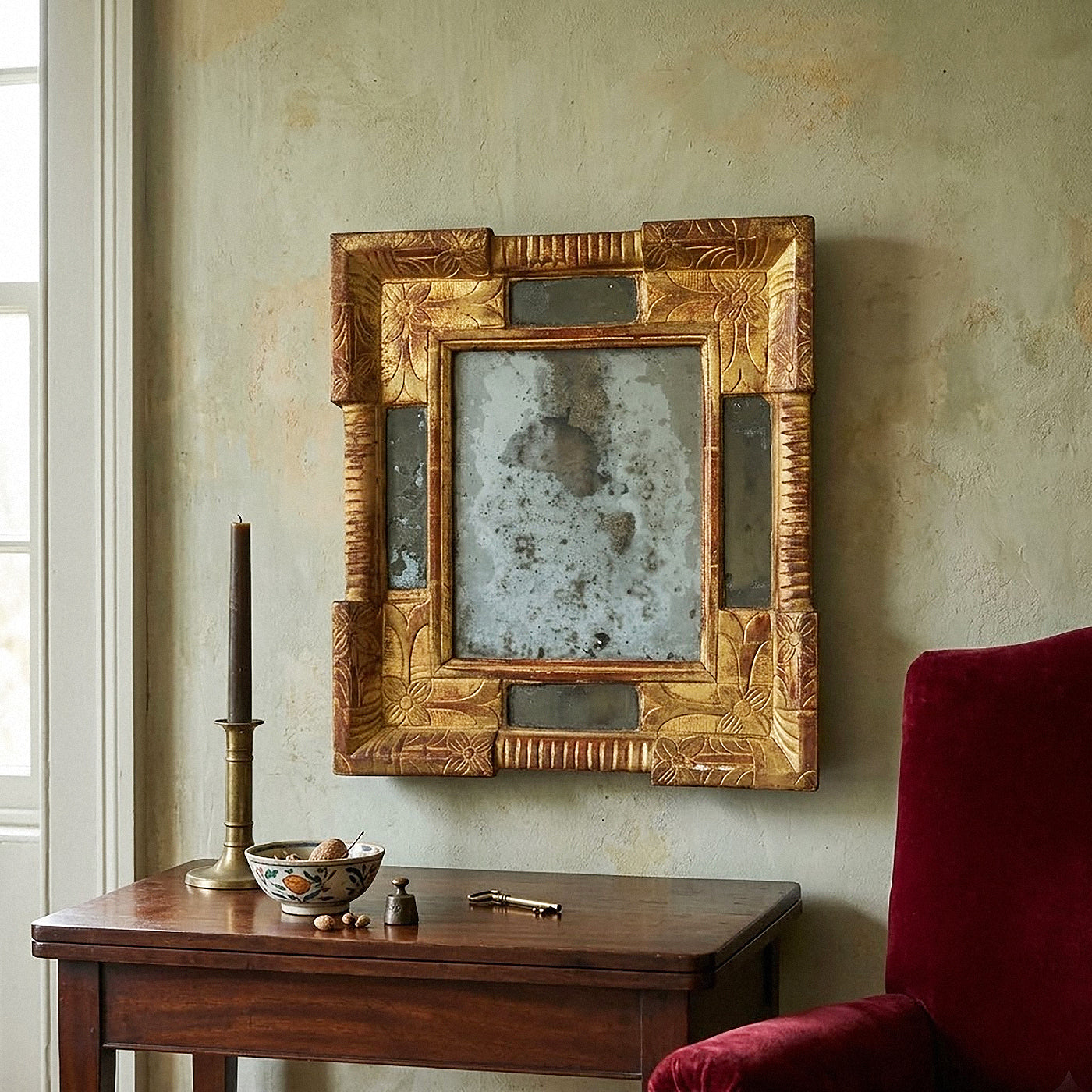
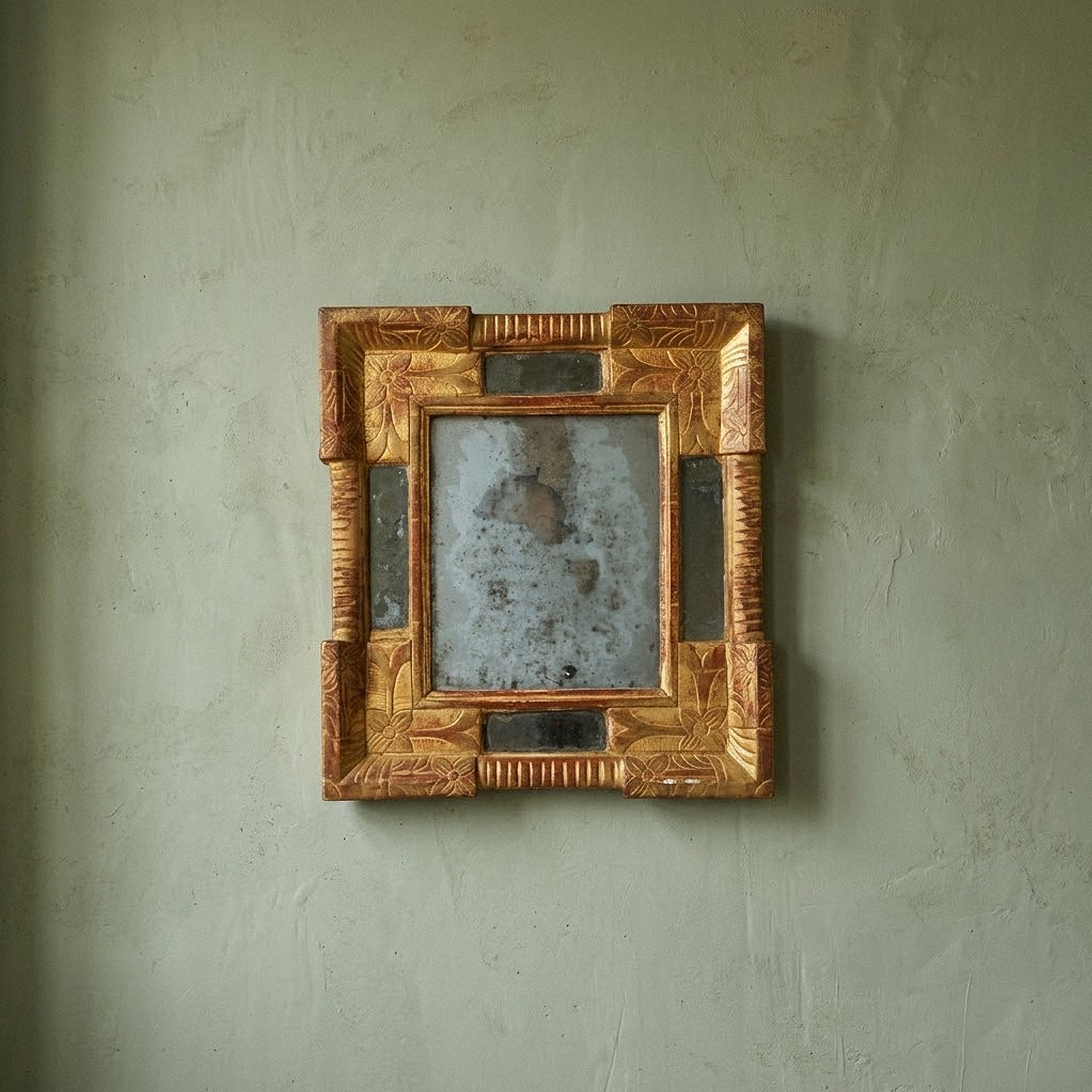
The frame’s architectural presence is defined by deep fluting and gadrooning, punctuated by four inset faux-panels. These panels, treated with dark églomisé to mimic the somber depth of obsidian or pietra dura, provide a dramatic tonal counterpoint to the surrounding gilding.
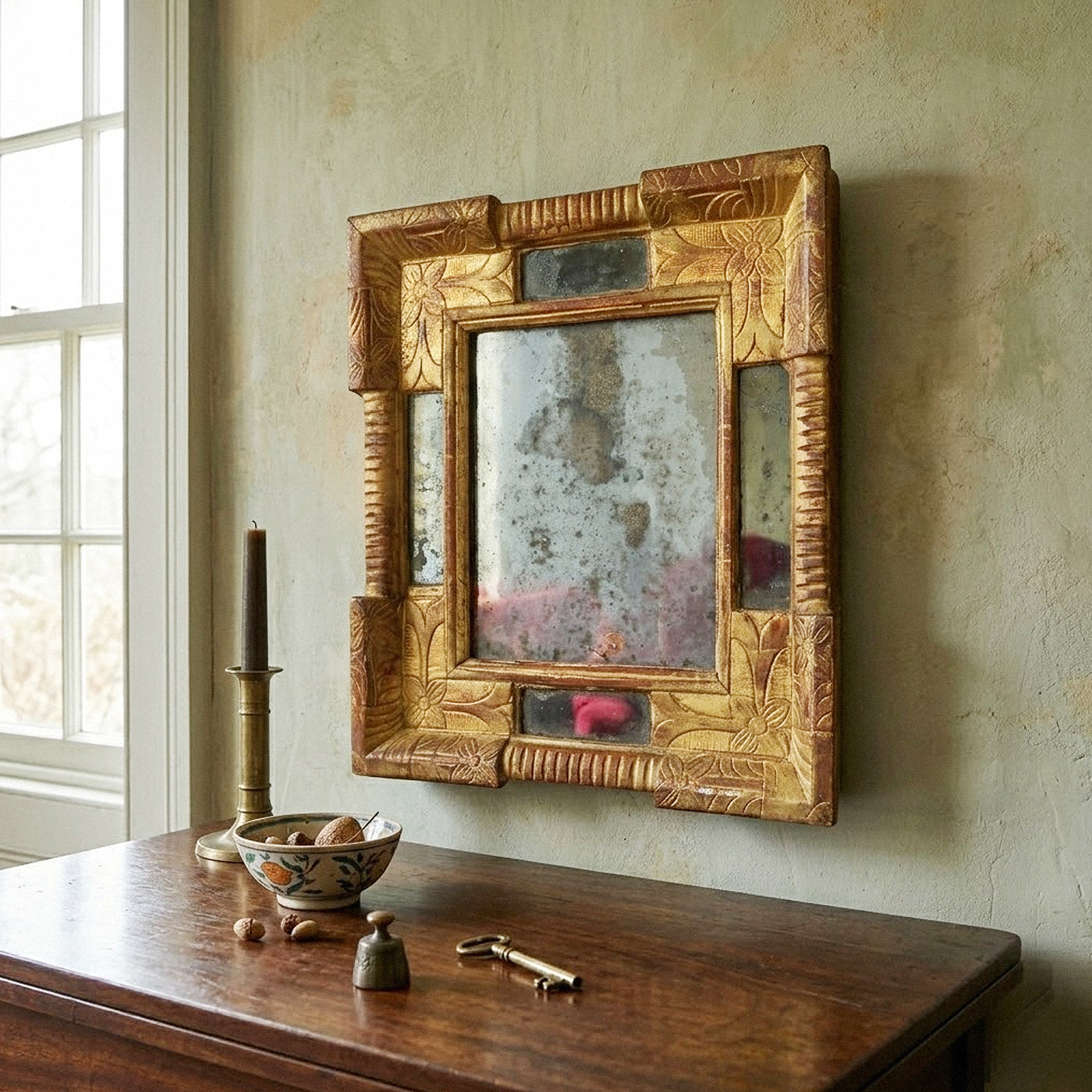
However, the soul of the piece resides in the original mercury-silvered glass. Heavily oxidized, the plate has evolved into a nebula of cloudy greys and atmospheric spots. To look into this mirror is to engage with history itself; it captures light with a soft, poetic hue, transforming the contemporary environment into a sepia-toned memory. This is not a utilitarian object, but a curated relic intended for a home rich with texture and the Old World.
Specifications:
Origin: North Italy (Florence or Venice)
Period: Late 17th Century (c. 1670–1690)
Style: Italian Baroque / Cassetta
Material: Hand-carved Giltwood, Gold Leaf over Red Bole, Original Mercury-Silvered Glass, Dark Lacquer Faux-Panels
Dimensions: H. 39 cm | W. 36 cm (Approx. 15.3" x 14.1")
Condition: Excellent historical condition; original mercury glass with heavy atmospheric oxidation; authentic wear to gilding revealing red bole ground. Chips and/or losses to some minor areas of the gilding.
Delivery: Complimentary shipping within the USA is included in price.
Historian's Note:
The cassetta (literally "little box") frame is one of the most significant developments in the history of European decorative arts. Originally derived from the architectural moldings of the Renaissance, by the late 17th century, it evolved to incorporate the more exuberant floral and foliate motifs of the Baroque.
This specific mirror illustrates the transition toward the Rococo, where the rigid symmetry of the 1600s began to soften into the organic, flowing details of the early 1700s. The inclusion of the églomisé panels is particularly noteworthy; it reflects a period obsession with pietra dura and rare stones, which were often too heavy or expensive for smaller domestic objects. By mimicking these materials, the craftsman elevated the mirror from a functional wall hanging to a piece of "trompe l'oeil" art, intended to spark conversation and admiration in a private study or dressing room. To own such a piece is to preserve a tangible link to the intellectual and aesthetic ambitions of the Italian Seicento.
Choose options