

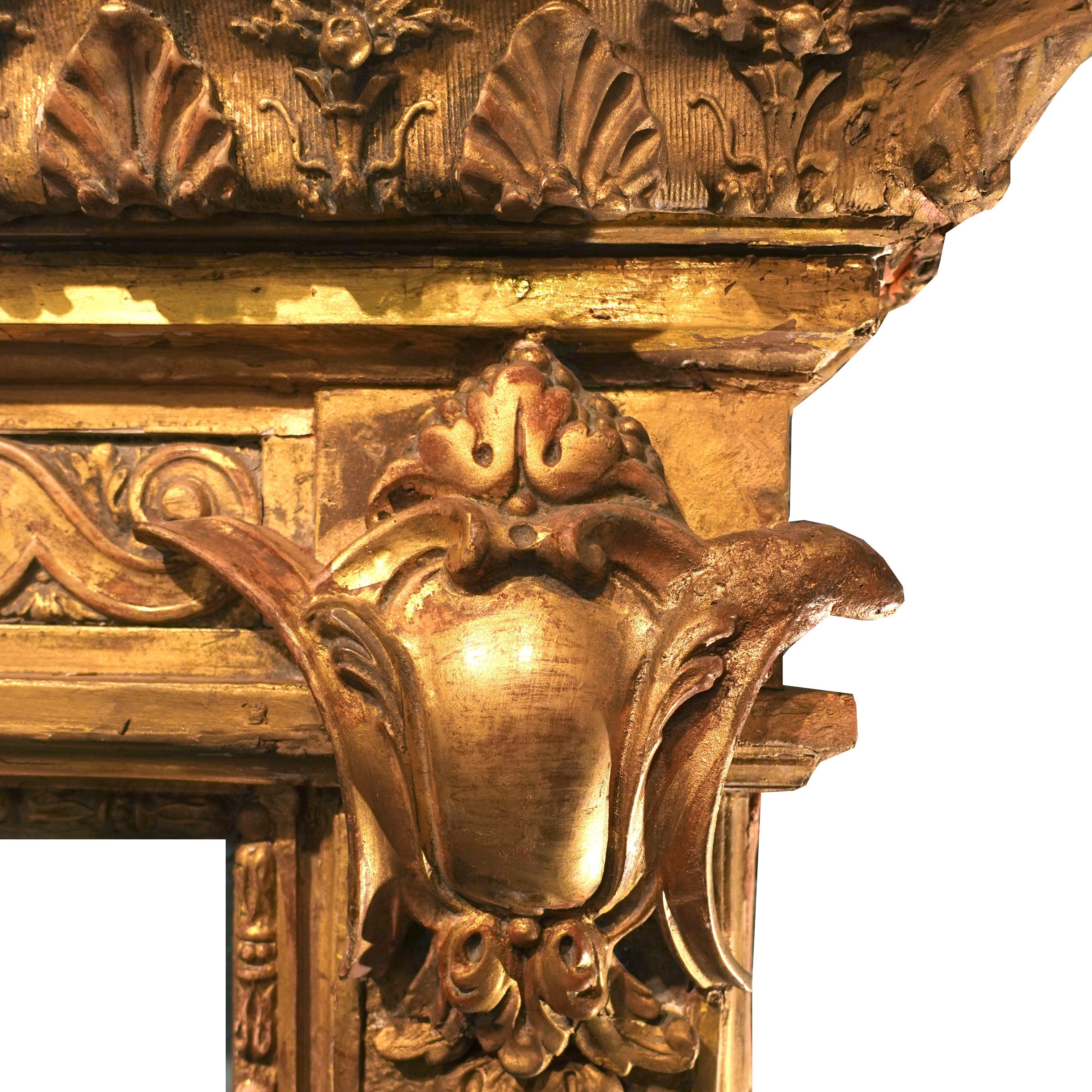


18th C. French Giltwood Frame with Canova Sculpted Lions
In the realm of curated European antiques, few objects possess the gravity to anchor an entire room. This monumental late 18th-century French giltwood frame is not merely an accessory to art; it is a sculptural event. Conceived at the zenith of the Louis XVI period, it represents a definitive moment where the architectural rigor of Neoclassicism met the lingering romanticism of the late Baroque.
To run one’s hand across the relief is to touch the craftsmanship of a masterful Parisian workshop. The upper register unfolds with an exquisite arched tympanum, where a textured baldachin drapes elegantly over a central cartouche. Within this cartouche rests a blooming tulip—a symbol of fleeting beauty captured in permanent gold.
Most arresting are the flanking sculpted lions, rendered with a naturalism that betrays a deep awareness of Italian mastery. These "Canova Lions"—inspired by Antonio Canova’s 1792 monument for Pope Clement XIII—stand as the "Watching" and "Sleeping" guardians of the piece. This interplay of French refinement and Italian sculptural tradition is a hallmark of the School of Fontainebleau influence, making this frame a "sculptural anchor" for the discerning Quiet Editor of a home. For the interior designer or cultural collector, this is more than a frame; it is a lineage of European power and artistic intellect.
Specifications:
Origin: France
Period: Late 18th Century (ca. 1800)
Style: Louis XVI / Late Baroque Transition
Material: Hand-carved Giltwood
Dimensions: Approx. 52” (h) x 48” (w) x 5” (d)
Condition: Excellent antique condition commensurate with age. Authentic patina with minor nicks and character-defining losses to the gilding along the edges, testifying to its historical journey.
Historian’s Note:
The inclusion of the Canova-inspired lions on this frame marks a significant cultural moment in the late 18th century. After the unveiling of the tomb of Pope Clement XIII in St. Peter’s Basilica, the "Canova Lions" became symbols of the dual nature of the soul—the vigilance of the "Watching" lion and the peace of the "Sleeping" lion. To see these motifs integrated into French giltwood highlights the cross-pollination of European artistic capitals during the Grand Tour era. This piece served not just to frame an image, but to elevate the domestic interior into a temple of Enlightenment thought and Classical revival.
Choose options