
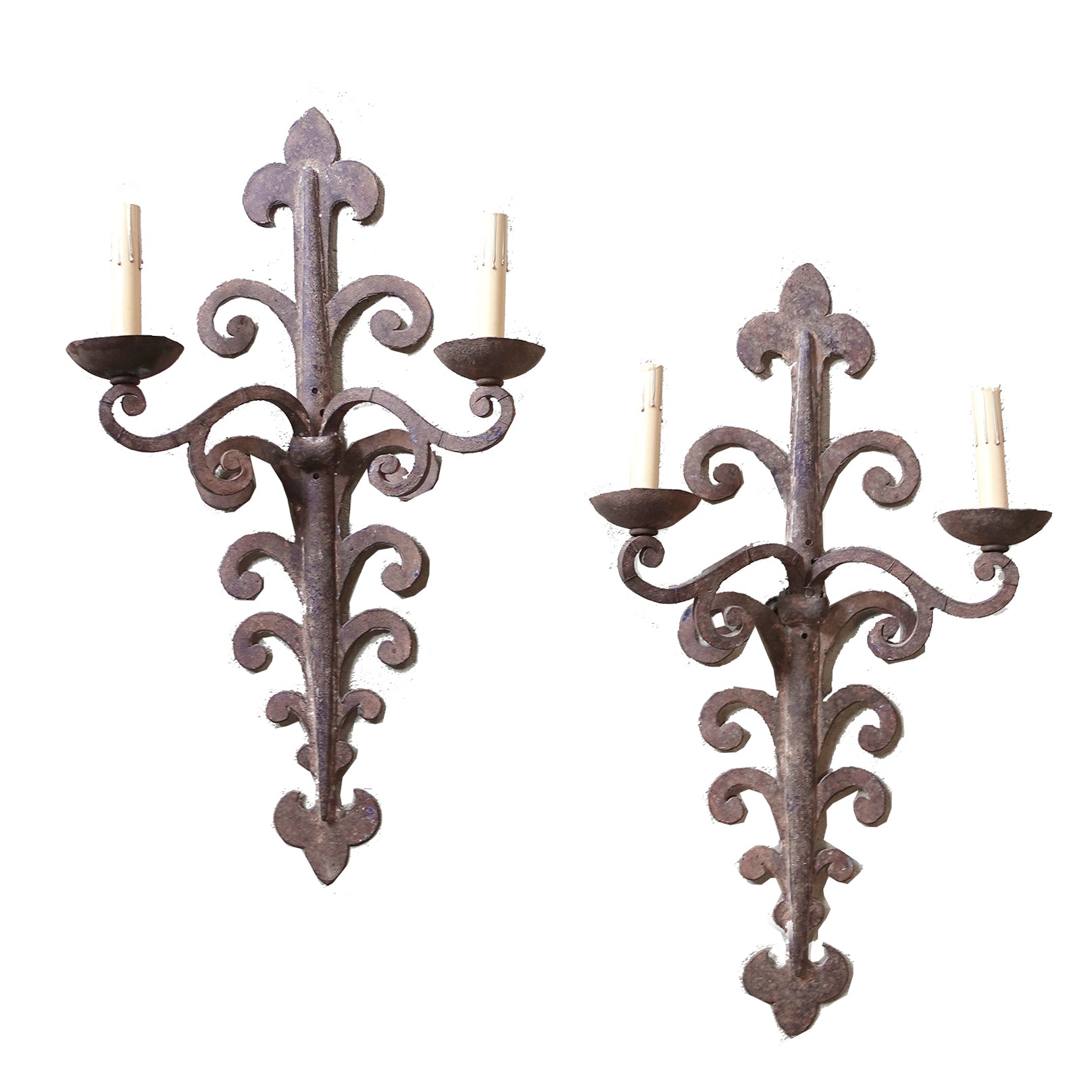
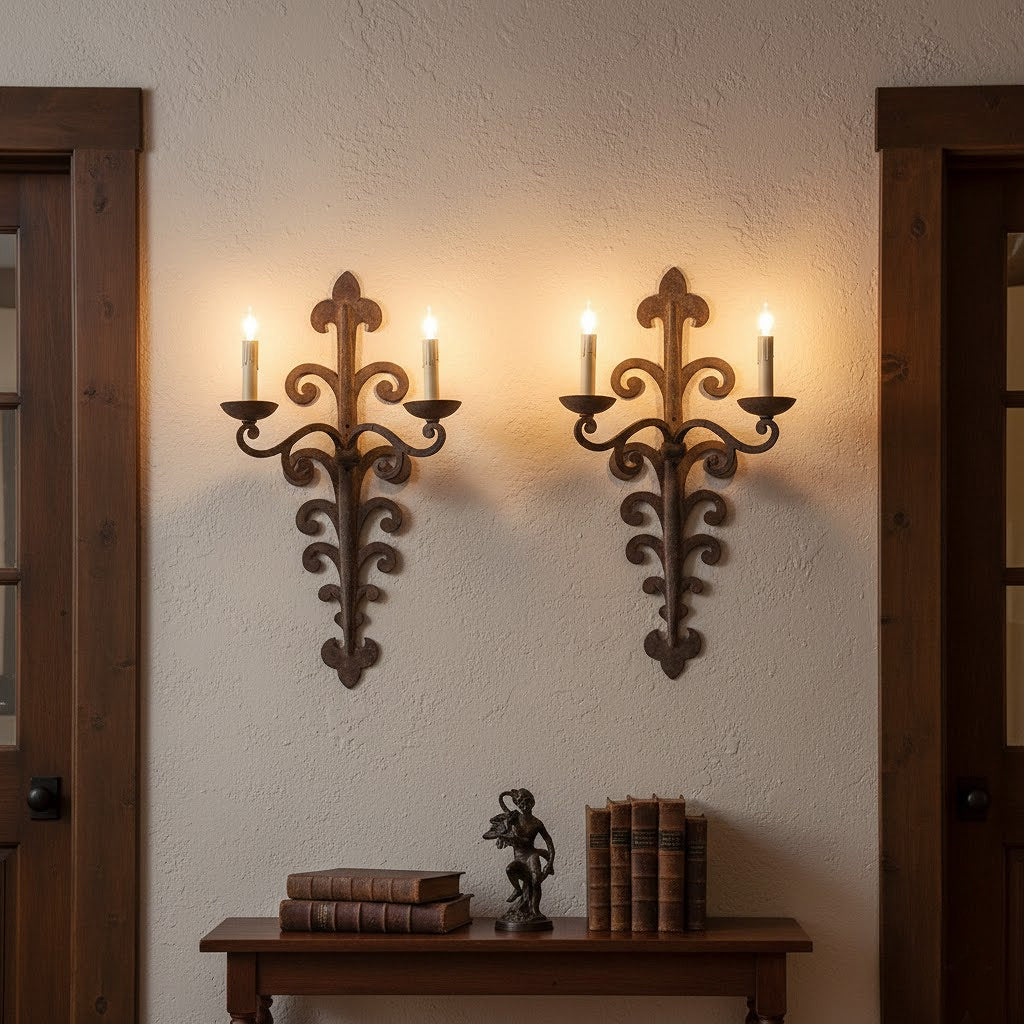


The Sovereign Pair: 18th-Century Hand-Forged Wrought Iron Sconces
Imagine a twilight evening in a grand Mediterranean estate at the close of the 18th century. Before the advent of flicking switches, light was a deliberate, flickering ceremony. This exquisite pair of wall sconces was born in that era—forged by hand in a time when iron was mastered with fire and strike, not machines.
Each sconce stands as a sentinel of Old World elegance. The central pillars are adorned with intricate foliate motifs, their metal leaves appearing to unfurl under the warmth of a candle's flame. Graceful scrolling volutes sweep downward, leading the eye to a majestic fleur-de-lys at the apex—a regal nod to a lineage that likely traces back to the master ateliers of Bourbon France or the artisan workshops of Northern Spain.
With a height of over 26 inches, these are not merely fixtures; they are architectural statements. Now expertly rewired for the modern home, they carry the weight of three centuries while offering a soft, atmospheric glow that modern reproductions simply cannot replicate. For the collector of cultural artifacts, these sconces serve as a bridge between the rugged strength of hand-hammered iron and the delicate sophistication of late-baroque design.
At Le Historique, we believe that an interior should be a curated autobiography. We specialize in sourcing "living" antiques—pieces like these sconces that possess a soul and a story. This pair has been hand-selected for its exceptional preservation of detail and its ability to anchor a contemporary library, a formal gallery, or a refined wine cellar with authentic European provenance.
Specifications:
Origin: Europe (Likely France or Spain)
Period: Late 18th Century
Material: Hand-Forged Wrought Iron
Dimensions: 26.5" H x 15" W x 5.5" D
Condition: Excellent antique condition; original pitting and patina preserved to honor its age. Professionally rewired.
Delivery: Shipping is not included in our pricing on this item. Please contact us to discuss shipping options.
Historian’s Note:
The Cultural Significance of 18th-Century Ironwork
In the late 1700s, decorative ironwork underwent a transformation. Moving away from the purely utilitarian, smiths began to incorporate the Fleur-de-lys and acanthus-style foliate patterns to mimic the opulence of the French court and the burgeoning Neoclassical movement.
The fleur-de-lys at the crown of these pieces is particularly significant; while it is the heraldic symbol of France, it was widely adopted across Europe as a mark of "divine right" and nobility. To own such pieces in the 18th century was a clear indicator of status, as hand-forging iron of this complexity required immense labor and a mastery of the "white heat" technique. Today, they remain a testament to a period where even the most functional objects—lighting—were treated as canvas for cultural expression and artistic permanence.
Choose options