
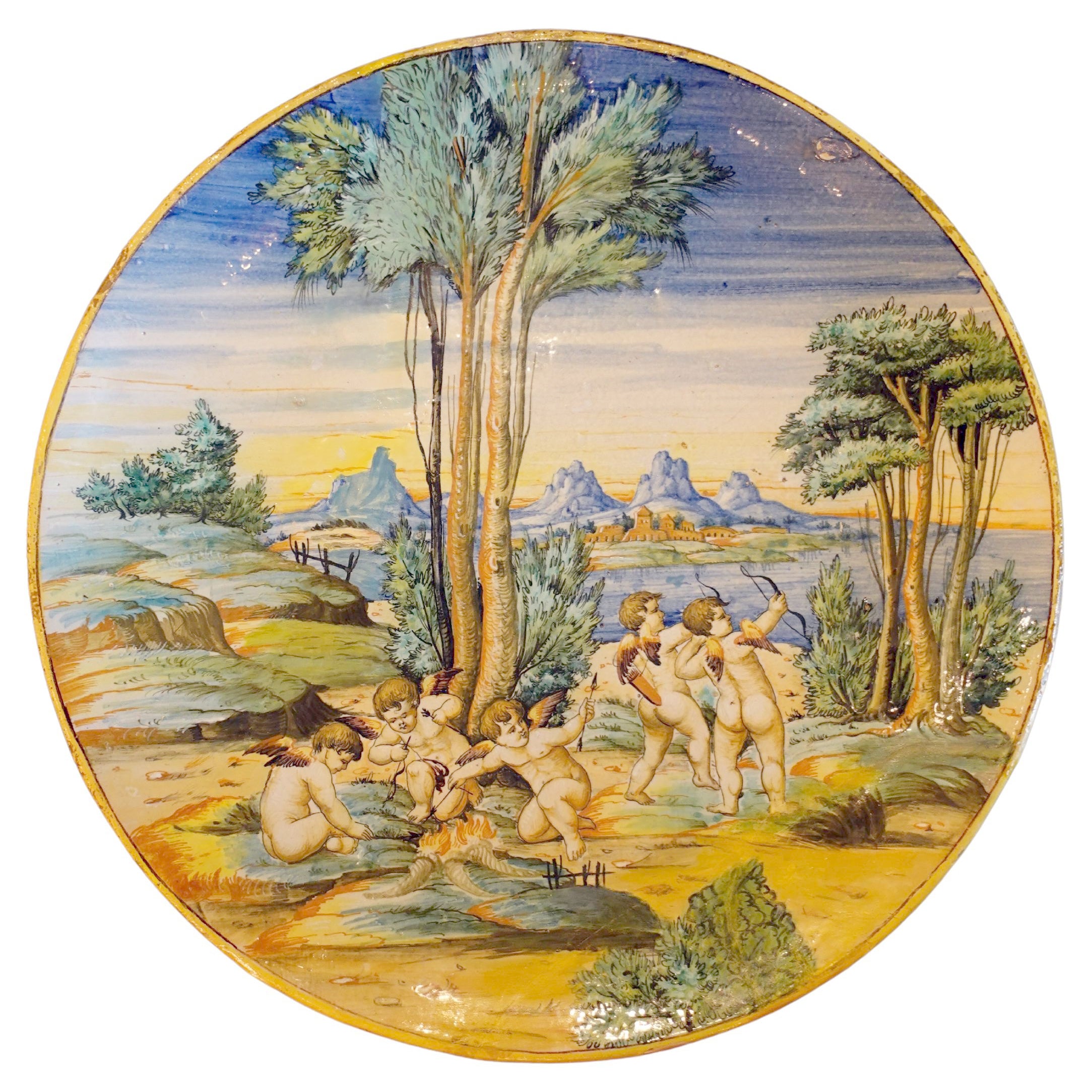
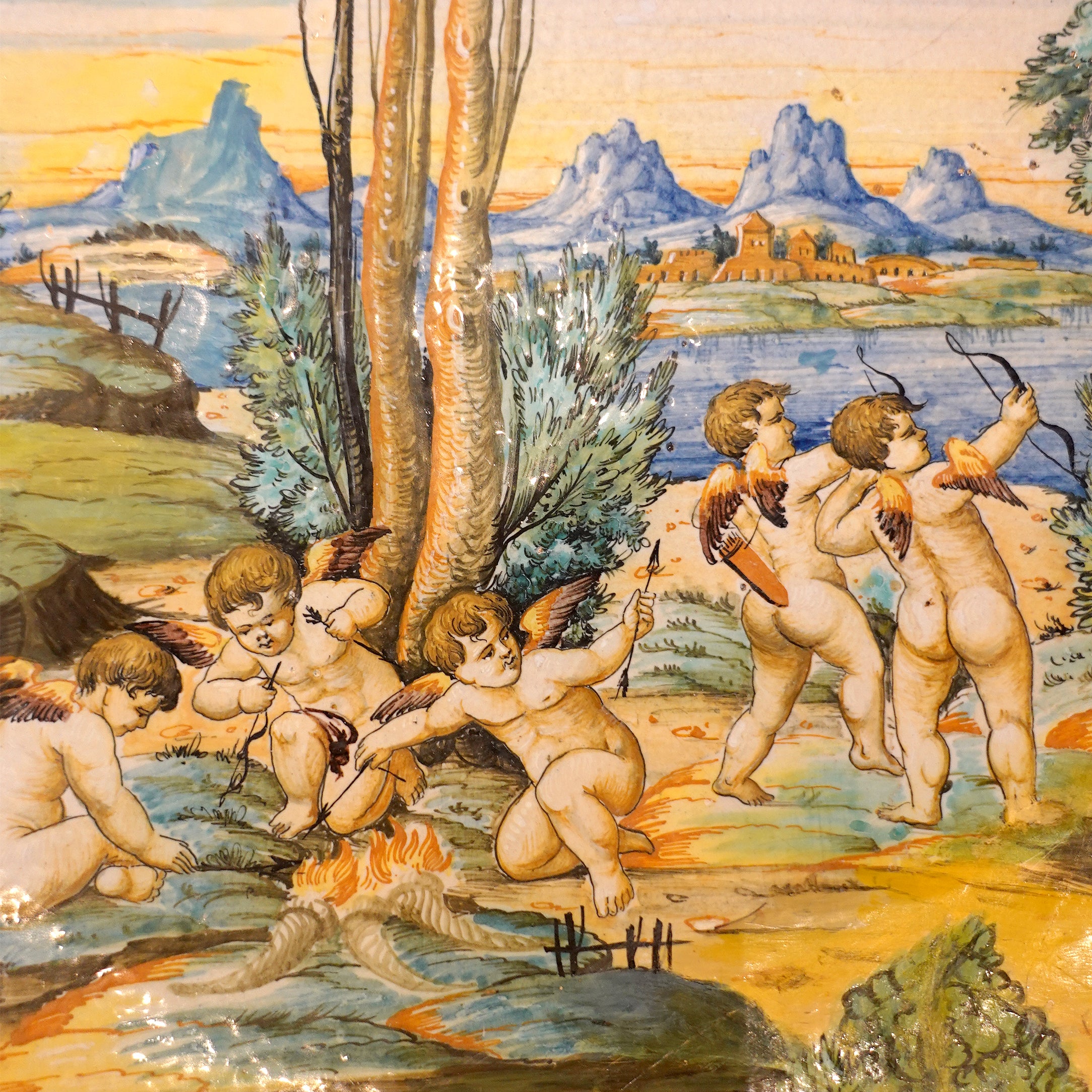


19th C. Italian Maiolica Wall Plate | Frolicking Cherubim
There is a specific luminosity found only in tin-glazed Maiolica, a depth of color that has captivated European aristocracy since the Renaissance. This monumental 19th-century wall plate is a vivid continuation of that legacy, capturing a scene of frolicking cherubim in a landscape.
Hand-painted with the spirited brushwork characteristic of the Italian masters, the central medallion serves as a window into a mythological Golden Age. The cherubim are rendered with a soft, sculptural quality, their forms illuminated against a classic Mediterranean palette of cobalt, ochre, and manganese.
For the interior designer or cultural collector, this plate offers a "sculptural anchor" for a dining room or grand hall. It is an object that carries the gravitas of history while maintaining a sense of whimsical joy. In a world of mass production, this hand-glazed treasure stands as a testament to the enduring allure of the Italian craft, making it a definitive piece for a home curated with intention.
Specifications:
Origin: Italy, probably Cantagalli family workshop in Florence
Period: 19th Century (ca. 1860–1880)
Style: Neo-Renaissance / Italian Maiolica
Material: Tin-glazed earthenware (Maiolica)
Dimensions: 15.75 (h) x 15.75 (w) x 1.5 (d) in.
Condition: Antique condition. Expect the delightful, minor glaze "pitting" and fine craquelure that signifies authentic tin-glazed ceramics of this age. Minor chips and scuffs along outer margins and minor loss to in the upper right ground of the scene which has been carefully in-filled and overpainted.
Delivery: Shipping not included in price. Please contact our concierge for a bespoke transit quote.
Historian’s Note:
The 19th-century revival of Maiolica was a period of intense artistic pride in Italy. Workshops in centers like Urbino, Gubbio, and Casteldurante sought to rediscover the "lost secrets" of the 16th-century masters. This piece reflects the Istoriato (story-painted) style, which treats the surface of the ceramic as a canvas for historical or mythological narrative. Cherubim, or putti, were more than decoration; in the Neoclassical and Neo-Renaissance tradition, they symbolized the innocence of the soul and the abundance of nature. To possess such a piece in the 1800s was a mark of the "Grand Tour" intellect, signaling a deep appreciation for the classical foundations of Western art.
Choose options