
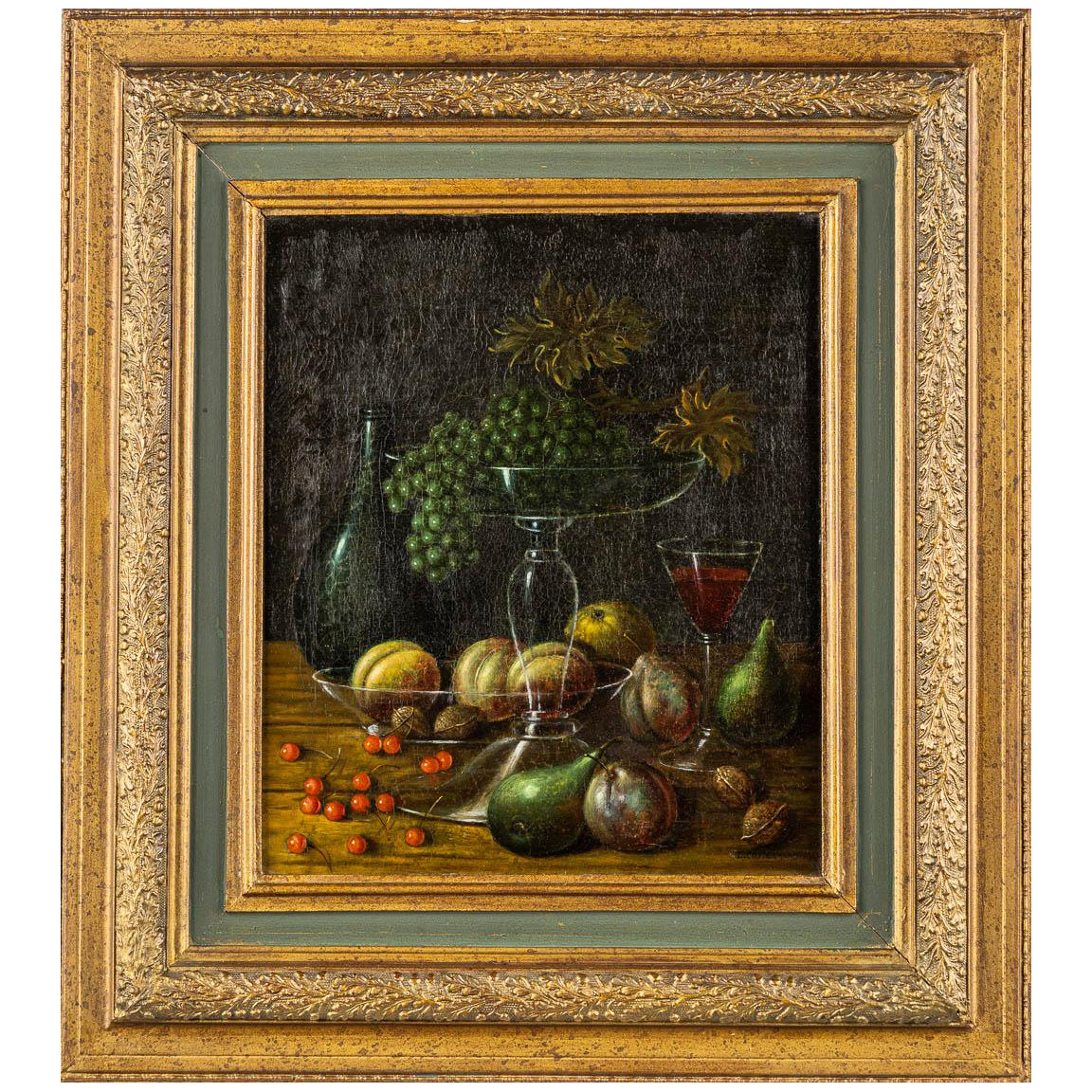


18th Century style Dutch Still Life Painting | Fruit Table Setting
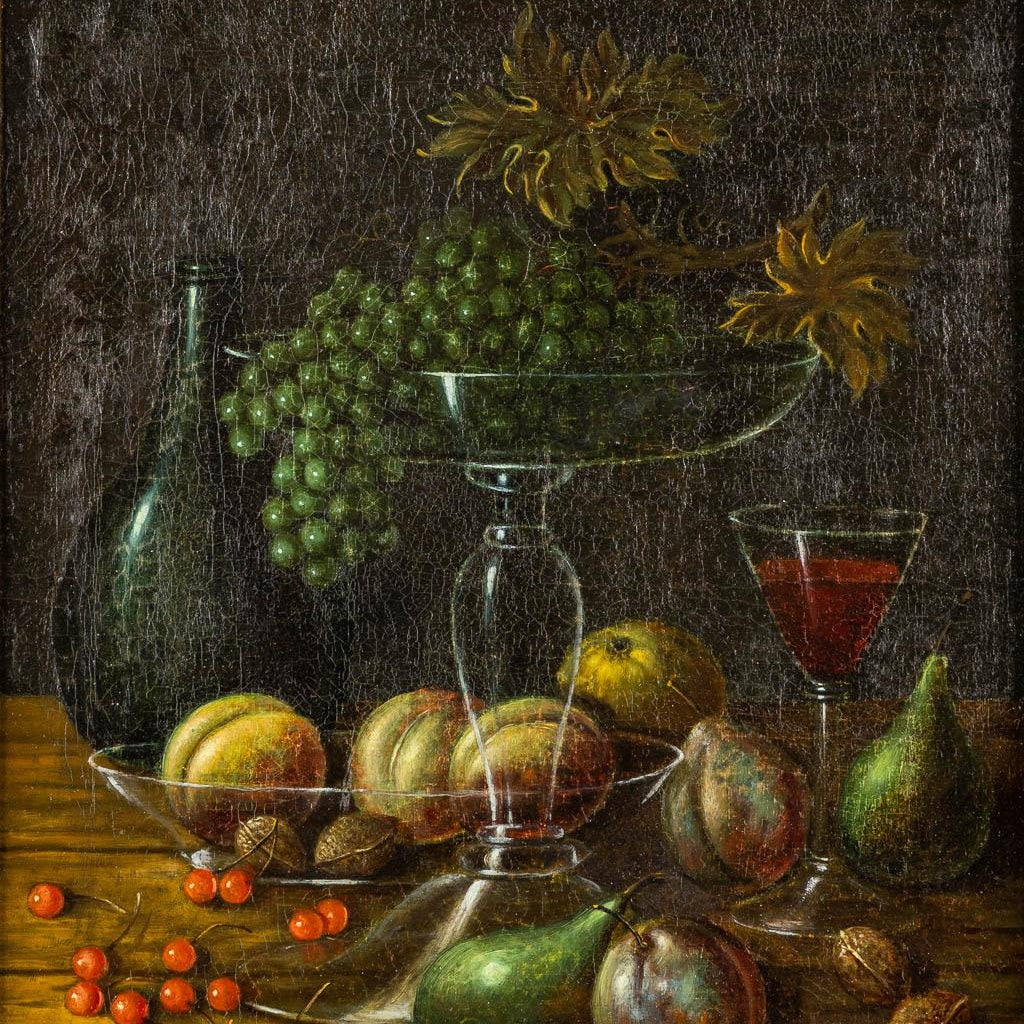
There is a profound silence in the Dutch still life—a stillness that speaks of domestic sanctuary and the intellectual pursuit of beauty. This oil-on-canvas is a wonderful homage to the Golden Age, capturing a table setting of fruits that transcends mere decoration to become a meditation on the senses.
Against a dramatic, deep-toned ground, the composition reveals a vibrant array of seasonal bounty. The play of light across the skins of the fruit demonstrates the "chiaroscuro" influence that defined the Dutch tradition, pulling the viewer into a world of tactile richness. Every brushstroke serves to elevate the humble table into a theater of color and form, making it a perfect "focal asset" for an interior designer looking to anchor a room with historical gravity.
Housed in a later 19th-century giltwood and polychrome frame, the painting carries a dual history—the artistic vision of the 1700s preserved through the discerning eye of a Victorian collector. For the cultural collector, this piece offers more than aesthetic pleasure; it provides a direct connection to the European tradition of the Ontbijtje (breakfast piece), where everyday life is treated as sacred.
Specifications:
Origin: Netherlands
Period: Late 18th Century (ca. 1780–1800) or 19th century
Style: Dutch Still Life Tradition
Material: Oil on Canvas; Giltwood and Polychrome Frame (19th Century)
Dimensions: Approx. 13” (h) x 11” (w) x 1.5” (d)
Condition: Antique condition. The canvas exhibits an authentic, fine craquelure consistent with age, adding a sought-after depth to the patina. Set in a well-preserved later frame.
Delivery: Complimentary shipping within the USA is included in price. Ships from our facility in Belgium. Please allow 2-to-4 weeks for arrival.
Historian’s Note:
In the 18th century, Dutch still life paintings were not simply displays of wealth, but "moral landscapes." Known as Pronkstilleven (ostentatious still lifes) or Vanitas, these works were coded with symbolism. The presence of fruit often represented the fleeting nature of life and the transience of earthly pleasures—a reminder to find beauty in the present moment while acknowledging its fragility. By the late 1700s, this genre evolved to emphasize a more domestic, intimate elegance, reflecting the sophisticated taste of the emerging European merchant class who sought to bring the "Golden Age" into their private salons.
Choose options