
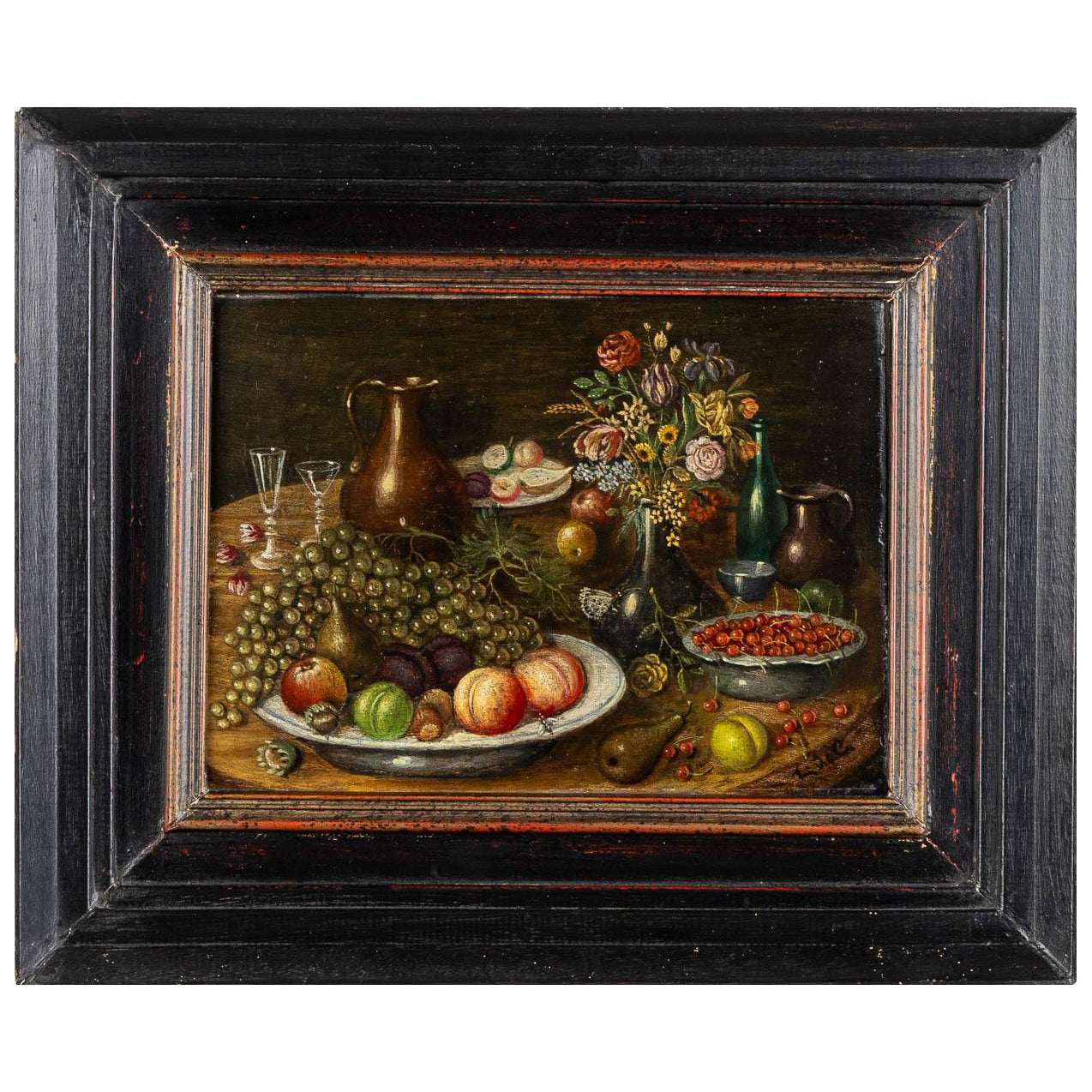


The Art of the "Ontbijtje": A Flemish Still Life
Step into the refined world of the 17th-century Antwerp elite. This 19th-20th century petite oil painting is inspired by the ontbijtje, or "breakfast piece," a genre pioneered by the legendary Osias Beert. Within this intimate frame, the ordinary is rendered extraordinary; the cool sheen of a pewter platter and the translucent luster of fruit are captured with the "Antwerp School" precision that defined the Golden Age.
Observe the forced perspective—a hallmark of the era—which invites the viewer to look down upon the table as if seated for a private viewing. Each element is placed with a "quasi-geometric" intentionality, bathed in the soft, diffused light characteristic of the Flemish Baroque. The work is a studious meditation on the tactile beauty of the physical world and the fleeting nature of luxury.
For the cultural collector, this piece offers a sophisticated connection to the lineage of European art history. For the interior designer, its petite proportions and rich tonal depth provide a "soulful" anchor for a library, a master suite, or a curated gallery wall. To own this work is to become a custodian of the very history that shaped Northern European aesthetic traditions.
Specifications:
Origin: Antwerp, Southern Netherlands (Modern-day Belgium)
Period: Early 17th Century (Circa 1610–1630)
Style: Flemish Baroque / Antwerp School "Breakfast" Still Life
Material: Oil on Panel / Period-Style Giltwood Frame
Dimensions: 6 (h) x 7.5 (w) x .75 (d) in.
Condition: Antique condition. Minor age-appropriate wear.
Delivery: Complimentary shipping is included in our price. Ships from our storage facility in Belgium. Please allow 2-to-4 weeks for delivery.
Historian’s Note:
The cultural significance of the Antwerp School still life cannot be overstated. During the early 1600s, Antwerp was the pulsing heart of the global luxury trade. Osias Beert and his contemporaries were among the first to elevate "inanimate objects" to the status of high art. These paintings were status symbols for the rising merchant class, reflecting the wealth flowing into the city through Chinese porcelain, exotic spices, and fine glassware. Philosophically, they often functioned as vanitas—a reminder of the transience of life (memento mori), where the perfect ripeness of a peach suggests the inevitable passage of time. This piece embodies that delicate balance between worldly opulence and spiritual reflection.
Choose options