


The Timeless Sentinel: A Mid-19th Century Swedish Mora Floor Clock
In the quiet, light-filled manors of 19th-century Scandinavia, time was kept by more than machinery; it was held within the graceful, anthropomorphic curves of the Mora clock. This exquisite specimen, curated by Le Historique, stands as a poetic testament to the Swedish Gustavian influence, draped in a beautifully aged sage-gray finish that whispers of two centuries of history.
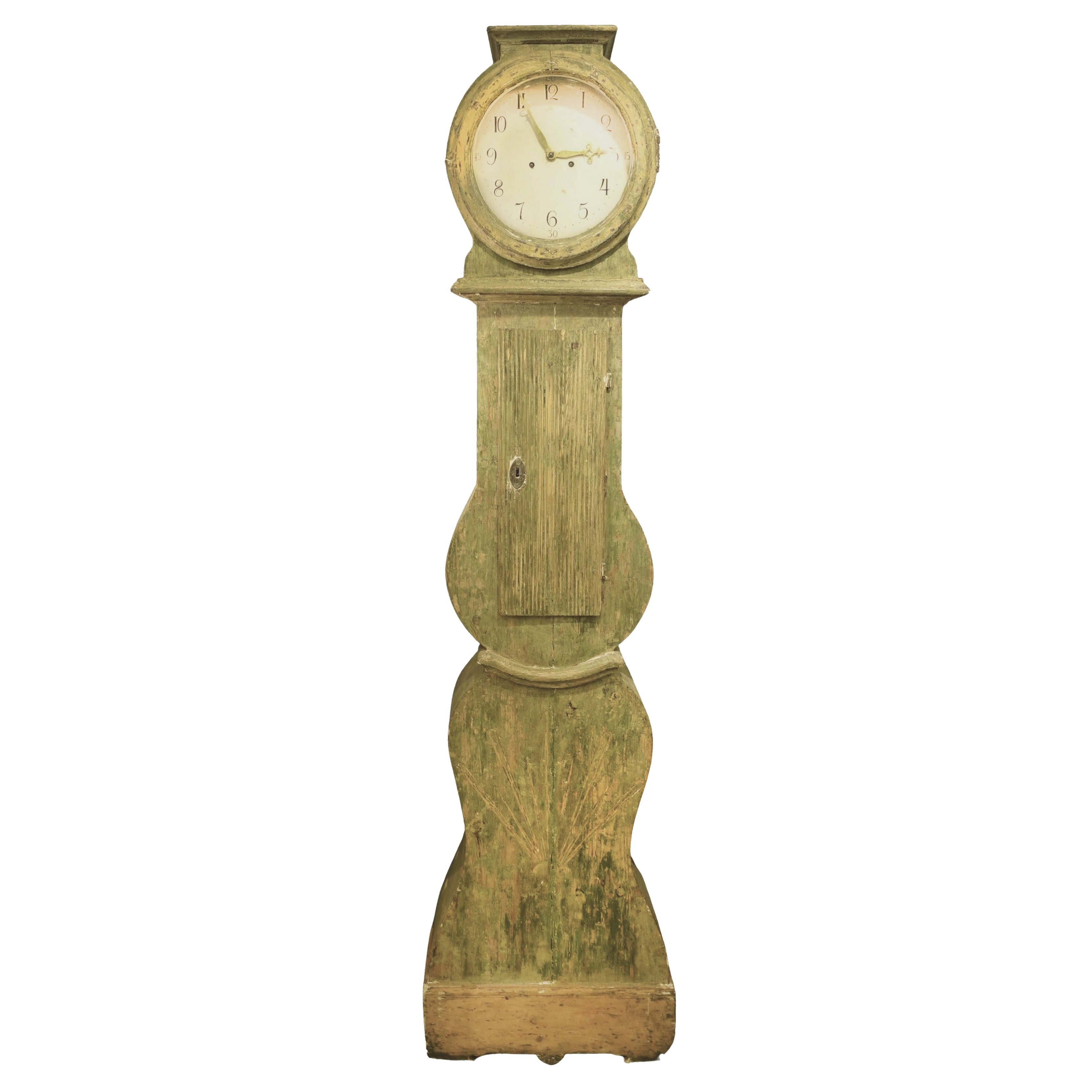
As the morning light shifts across its weathered surface, glimpses of the original amber-toned wood emerge, offering a visual depth that modern finishes cannot replicate. The lower case is anchored by a hand-engraved sunburst motif—a symbolic nod to the long-awaited Nordic summer—while the upper hood features a refined, grooved texture that frames the original enamel face. With its delicate craquelure and classic numerals, the dial serves as a soft, romantic focal point.
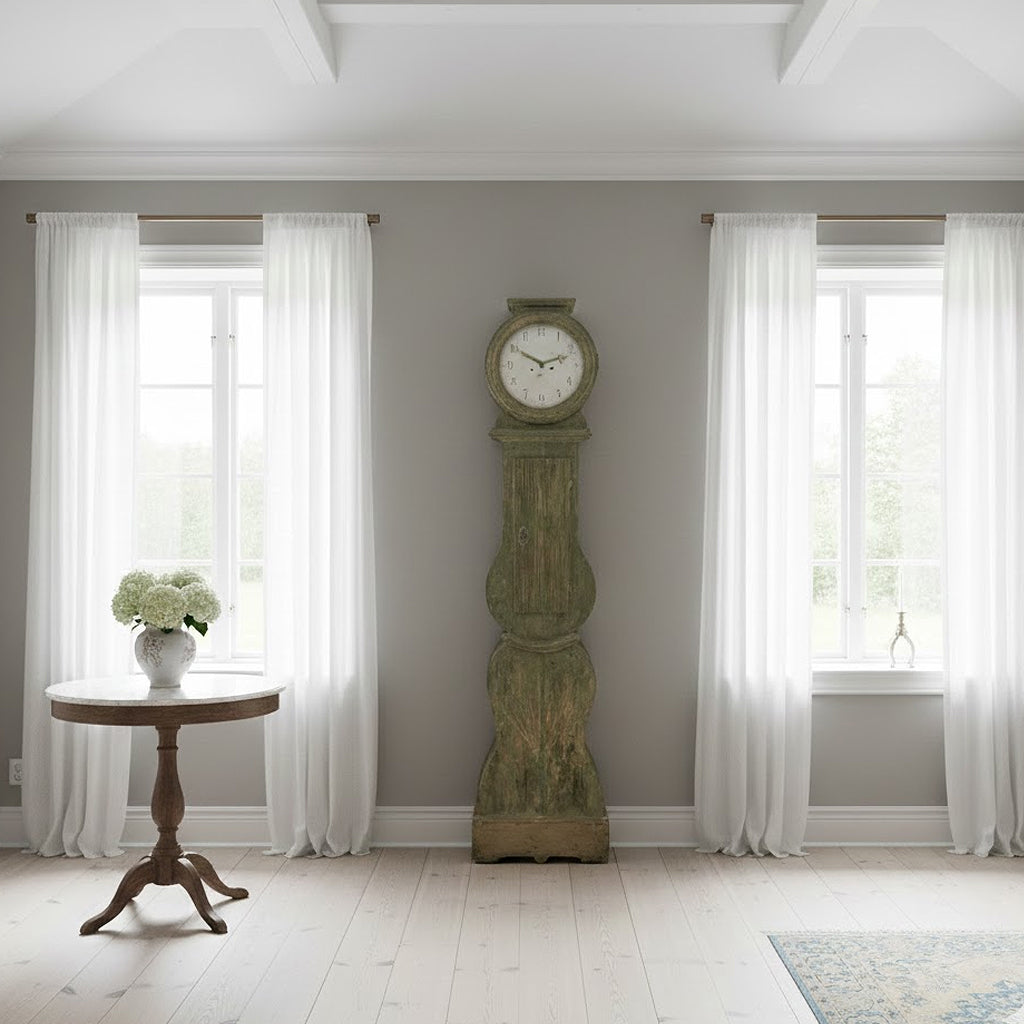
For the interior designer, this Mora clock offers an unparalleled verticality and "soul" to anchor a foyer or a minimalist living suite. It is a piece that does not merely occupy space; it commands it with a gentle, historic authority.
Specifications:
Origin: Mora, Sweden
Period: Mid-19th Century (Circa 1850)
Style: Gustavian / Swedish Country
Material: Northern Pine, Enamel Clock Face, Hand-Forged Iron Components
Dimensions: 84" (H) x 21.75" (W) x 10" (D)
Condition: Antique Condition. The sage-gray painted surface is naturally distressed. The enamel dial features an authentic craquelure with minor surface losses. Restored to full functionality in 2023; original key and lock included.
Delivery: White-Glove Continental & International Shipping available. Please contact our concierge for a bespoke transit quote. Please note, due to the delicate nature of the mechanical clockwork, Le Historique cannot guarantee functionality post-delivery but will make every effort to ensure a safe transport.
Historian’s Note:
The Mora clock is a unique phenomenon in European horology. Unlike the centralized clockmaking guilds of London or Paris, these clocks were a collaborative effort born from the village of Mora in the Dalarna province. During the agricultural off-season, families specialized in specific components: one household would forge the iron gears, another would craft the wood cases, and another would paint the iconic "bride" or "column" forms. This decentralized craftsmanship allowed for a level of soul and regional character rarely found in industrial pieces. The sunburst motif seen on this clock was a common folk-art element, representing life, growth, and the persistence of light in the northern latitudes.
Choose options