


A Monument to the Golden Age: The Monumental 17th-Century Flemish Oak Cabinet
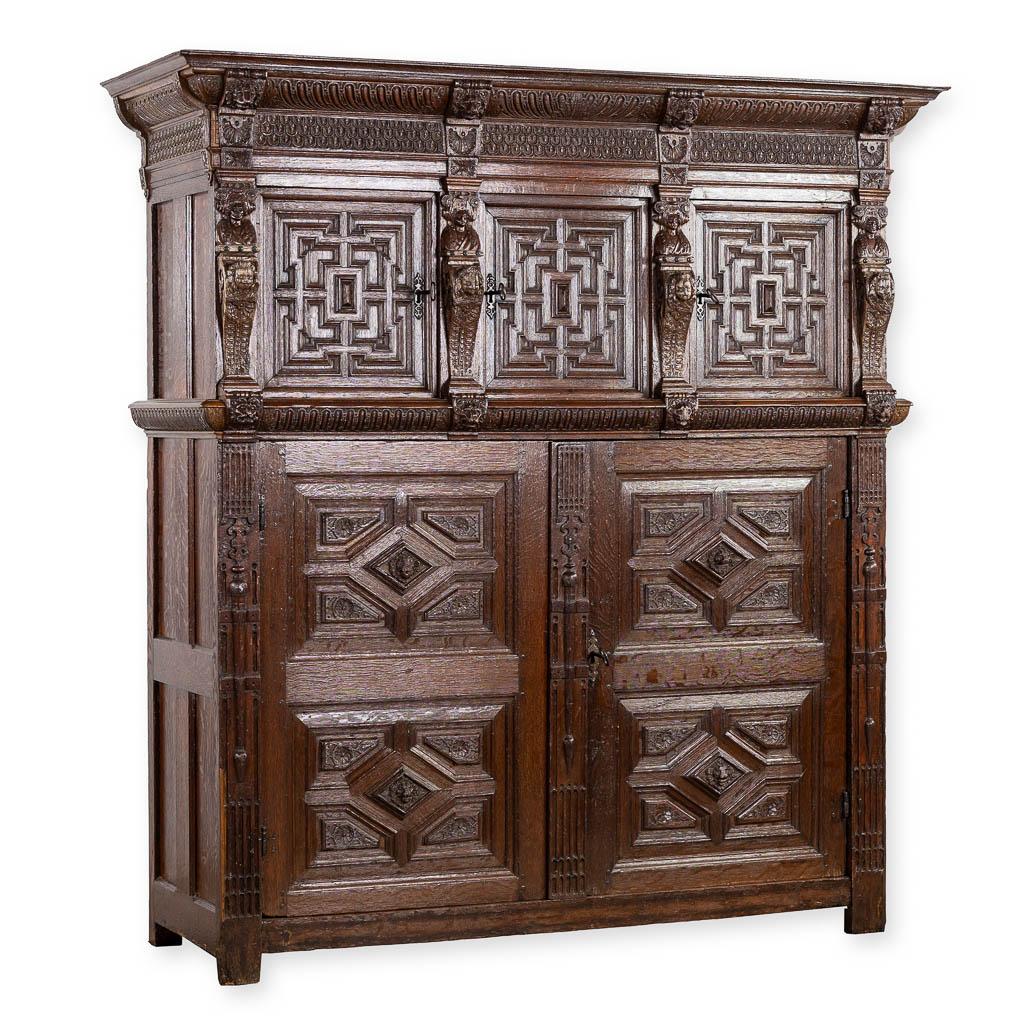
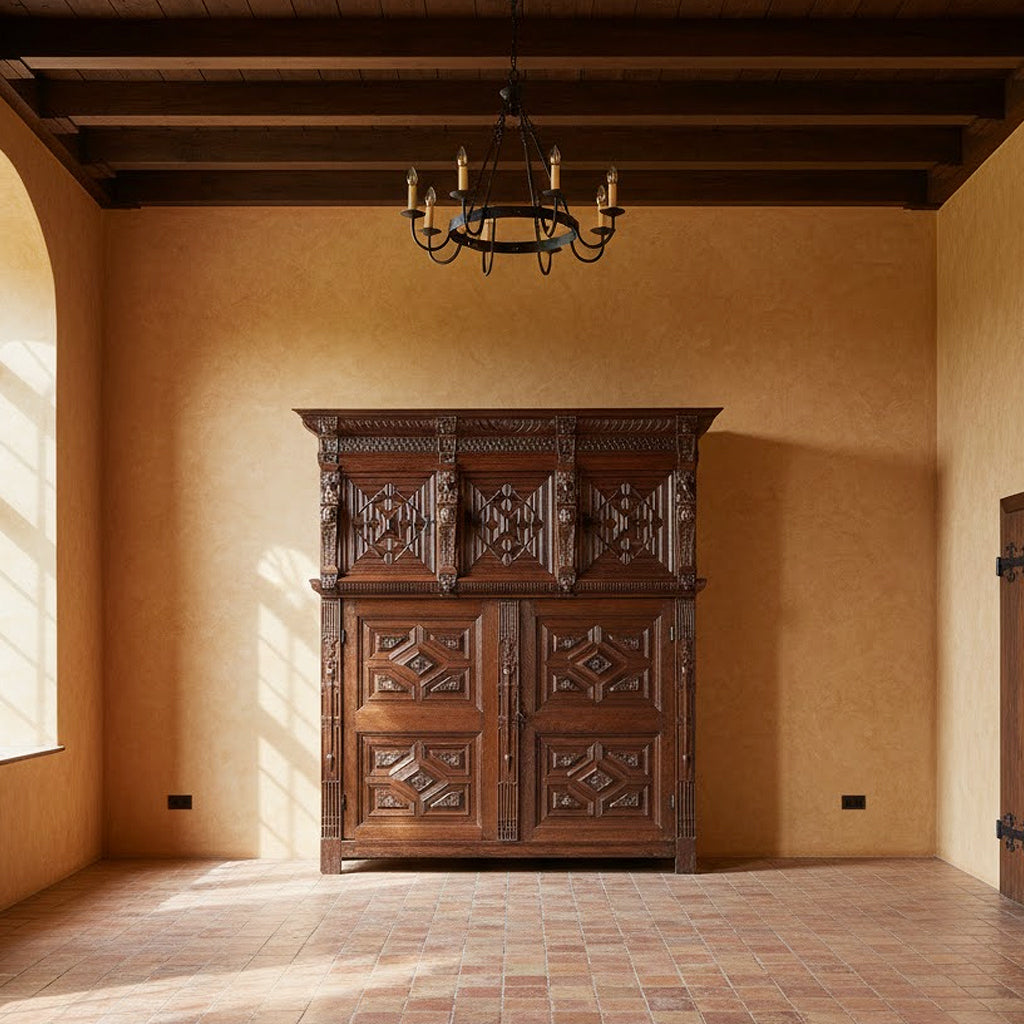
In the soaring interiors of a 17th-century Flanders manor, furniture was more than utility; it was a physical manifestation of power, faith, and the flourishing intellectualism of the Northern Renaissance. This monumental five-door cabinet, offered by Le Historique, stands as a towering masterwork of that era—a period where the rugged strength of European oak was transformed into a theatrical, architectural landscape.
Beneath an elaborate, overhanging cornice, the cabinet reveals a remarkably carved repertoire of high-relief iconography. Angelic caryatids serve as silent guardians, their serene forms contrasting with the visceral strength of protruding lion masks. The geometric, coffered door panels—deeply recessed and handsomely proportioned—create a play of shadow and light that grants the piece an undeniable presence, anchoring a room with the weight of centuries.
Secured by its original iron lock plates and hand-forged keys, this cabinet has survived the "Grand Siècle" with its soul intact. Its surface bears a rich, honeyed patina that only four hundred years of meticulous care can produce. For the interior designer, it is an unparalleled focal point; for the cultural collector, it is a rare opportunity to steward a piece of European heritage that bridges the gap between the Renaissance and the Baroque.
Specifications:
Origin: Flanders (Modern-day Belgium)
Period: Early-to-Mid 17th Century (Circa 1625–1650)
Style: Flemish Baroque / Northern Renaissance
Material: Old-Growth European Oak; Hand-Forged Iron Mounts and Keys
Dimensions: Approximately 77.5" (H) x 72" (W) x 26" (D)
Condition: Antique Condition. Displays a deep, historically significant patina with minor wear to the relief carvings (lion masks) and surfaces commensurate with a piece of this magnitude. Restorative care visible on interior shelving to ensure modern stability.
Delivery: White-Glove Continental & International Shipping available. Please contact our concierge for a bespoke transit quote.
Historian’s Note:
The 17th century in Flanders was a cultural crossroads, absorbing the artistic infusions of Spanish-controlled Southern Italy and the refined classicism of France. This specific style of cabinet, often referred to as a "Kussenkast" (Cushion Cabinet) due to the raised, pillow-like geometry of its coffered panels, was the ultimate status symbol for the Dutch and Flemish merchant class.
The inclusion of caryatids and lion masks serves a dual purpose: they are classical references to the Enlightenment’s rebirth of Greco-Roman ideals, while the lion specifically symbolized the "Leo Belgicus," representing the strength and independence of the Low Countries. To own such a piece was to display one's connection to the global trade and sophisticated tastes of the Antwerp and Ghent elite. This cabinet represents a transition from the heavy, closed forms of the Middle Ages to the more expressive, sculptural language of the Baroque.
Choose options