
Pair of Elaborately Carved 19th century Giltwood Mirrors
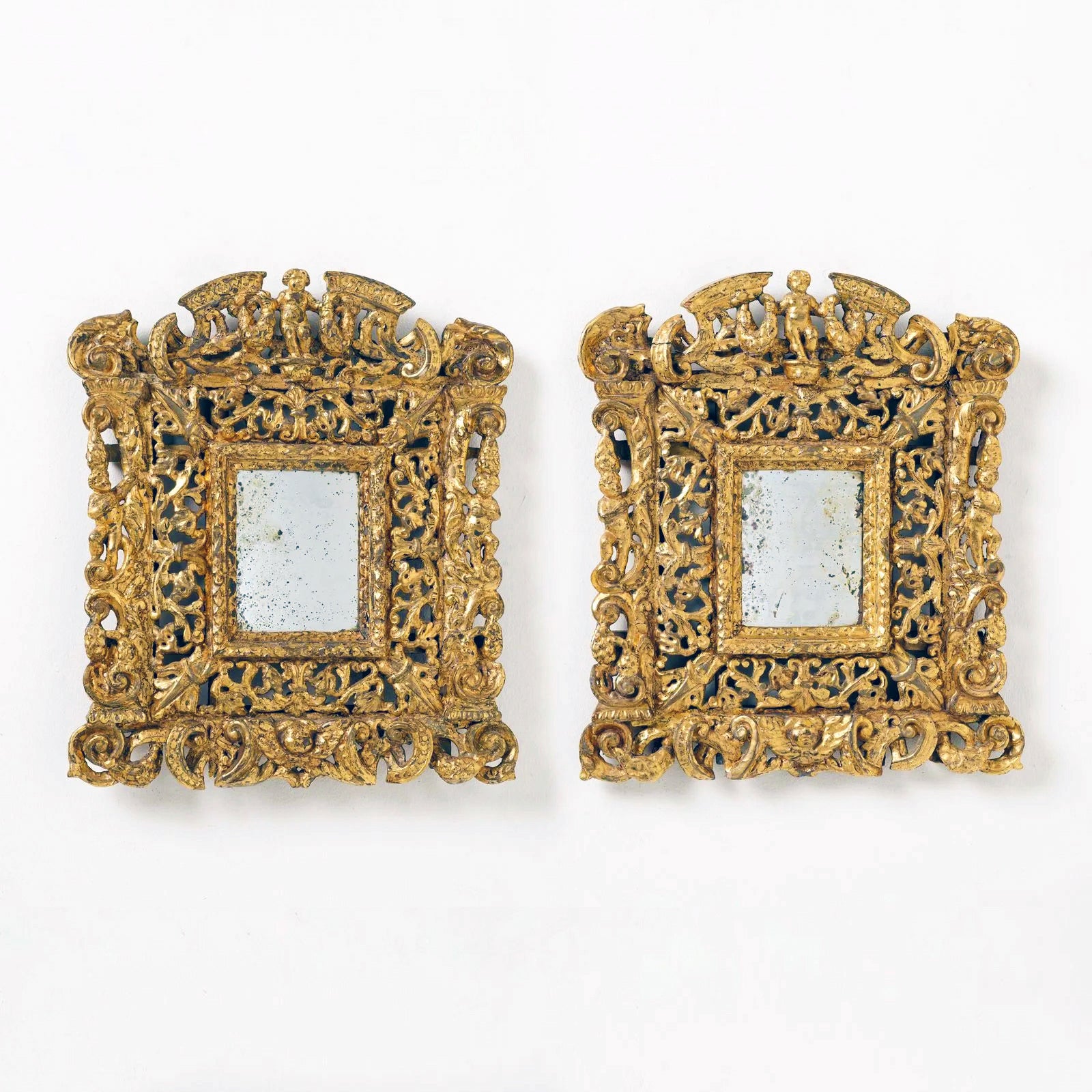
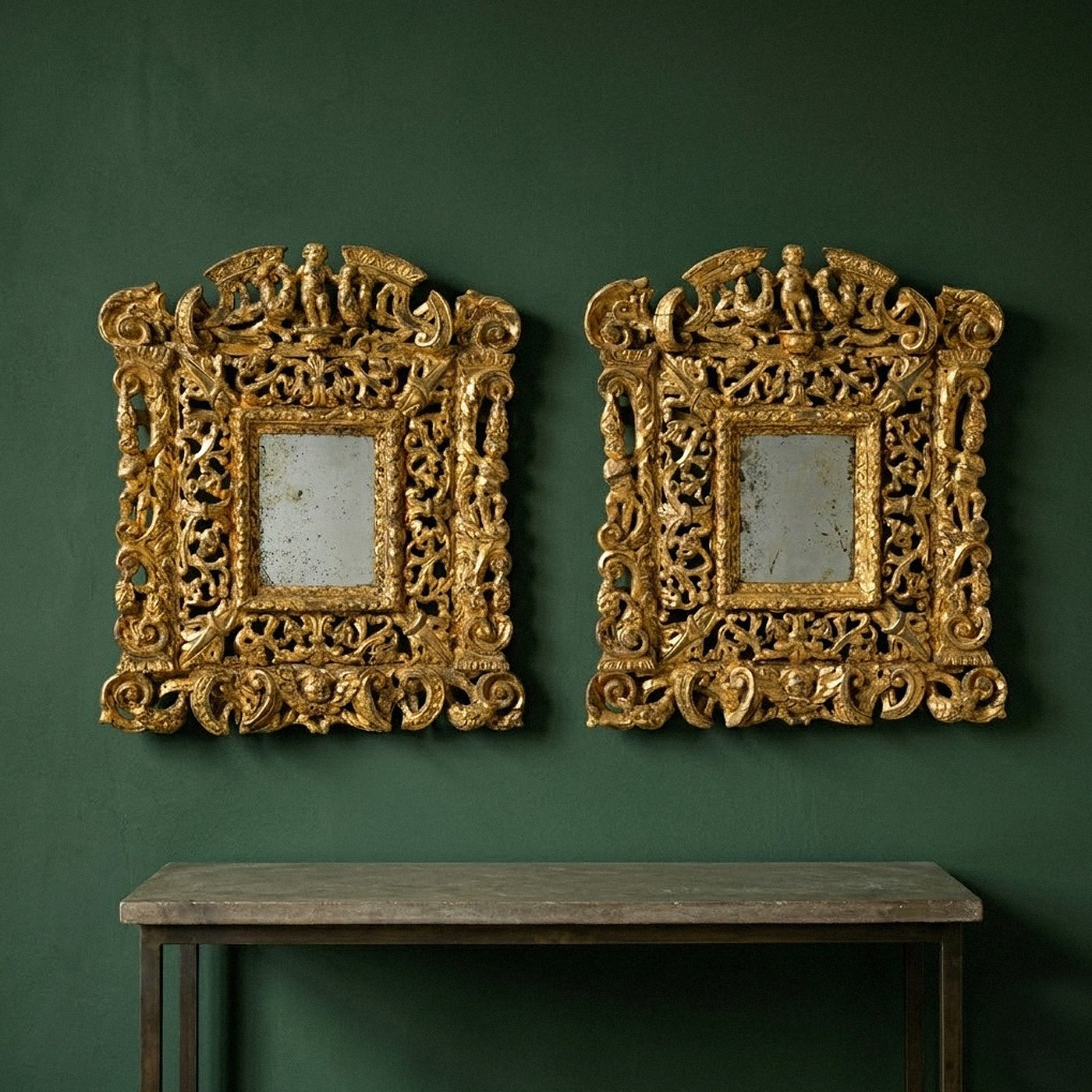
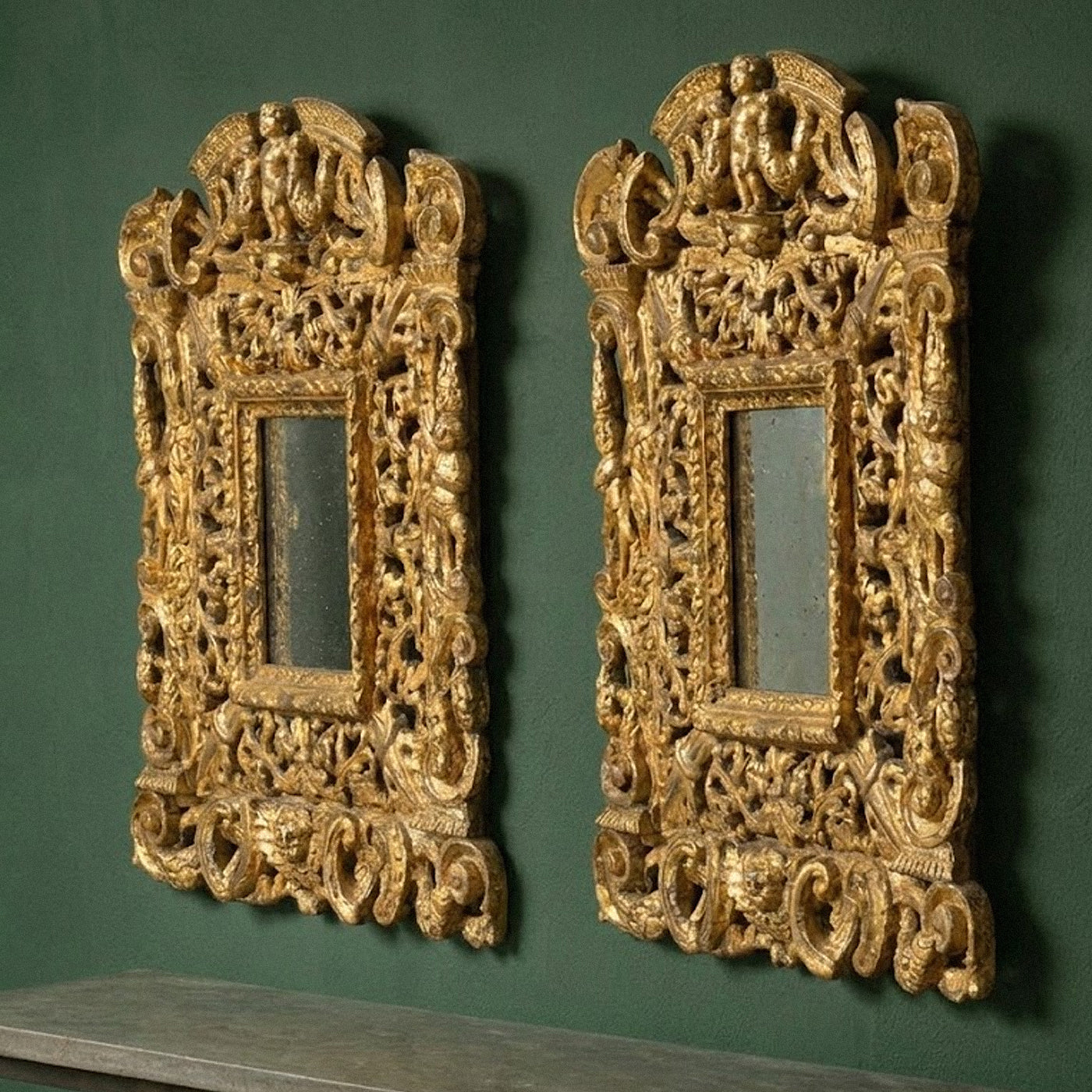
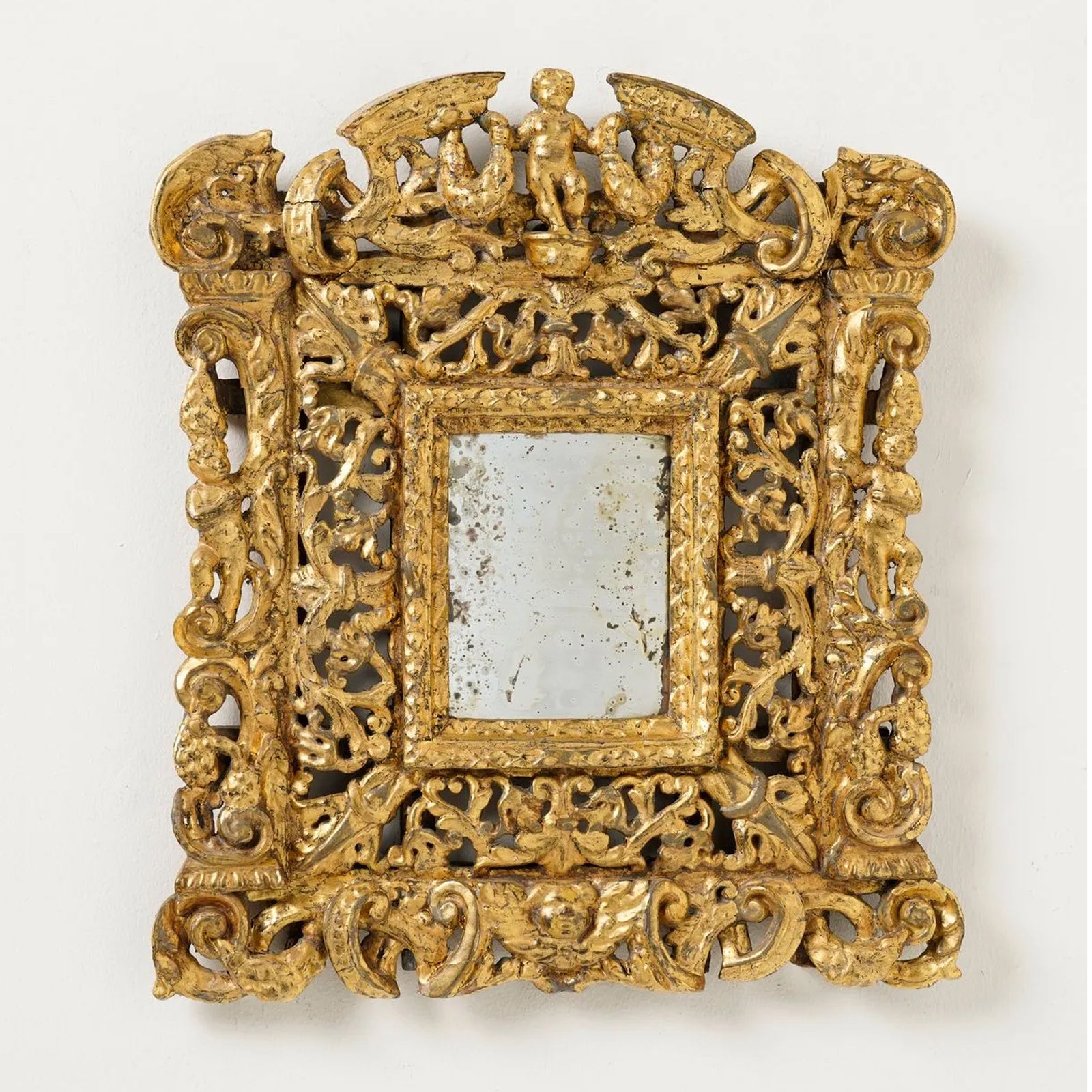
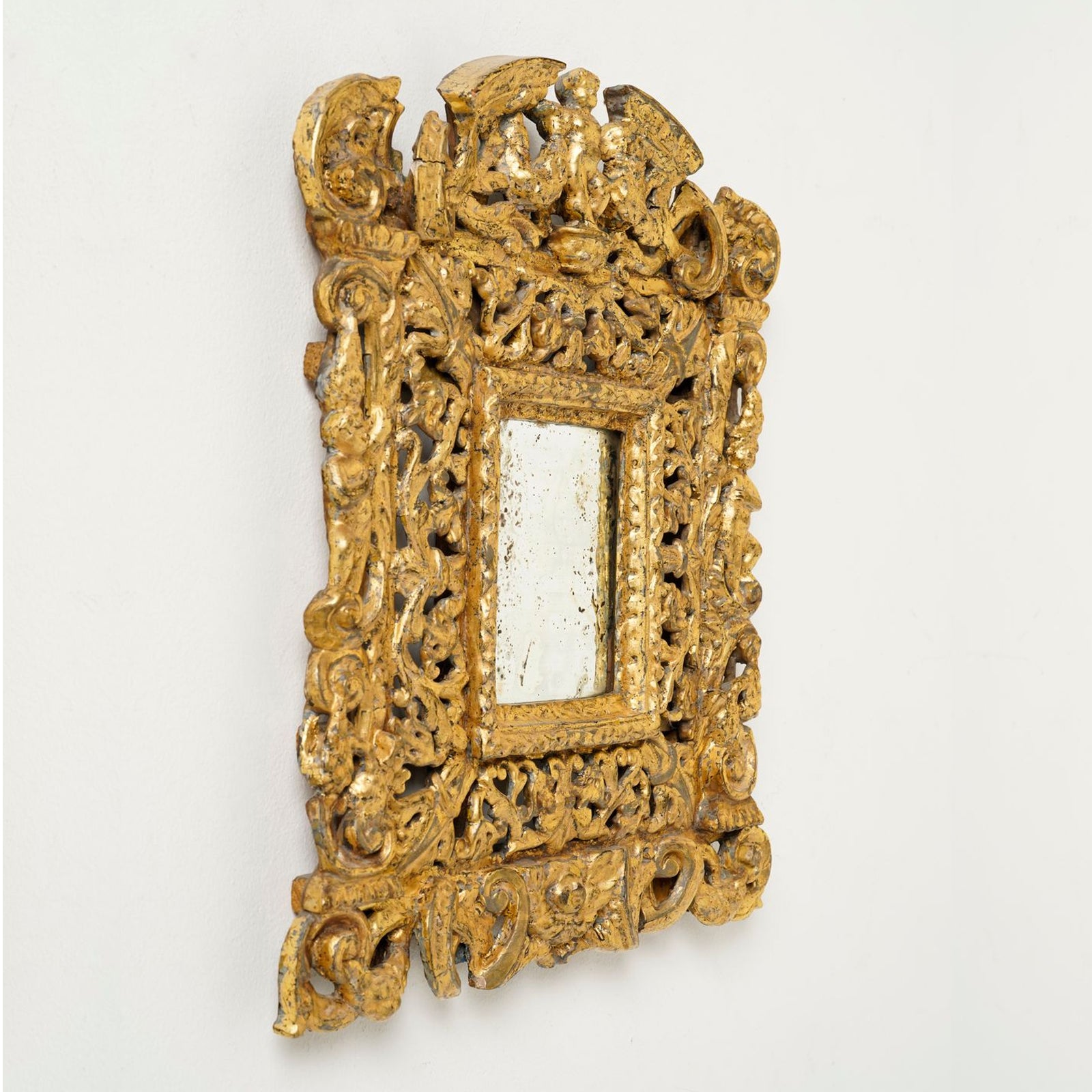
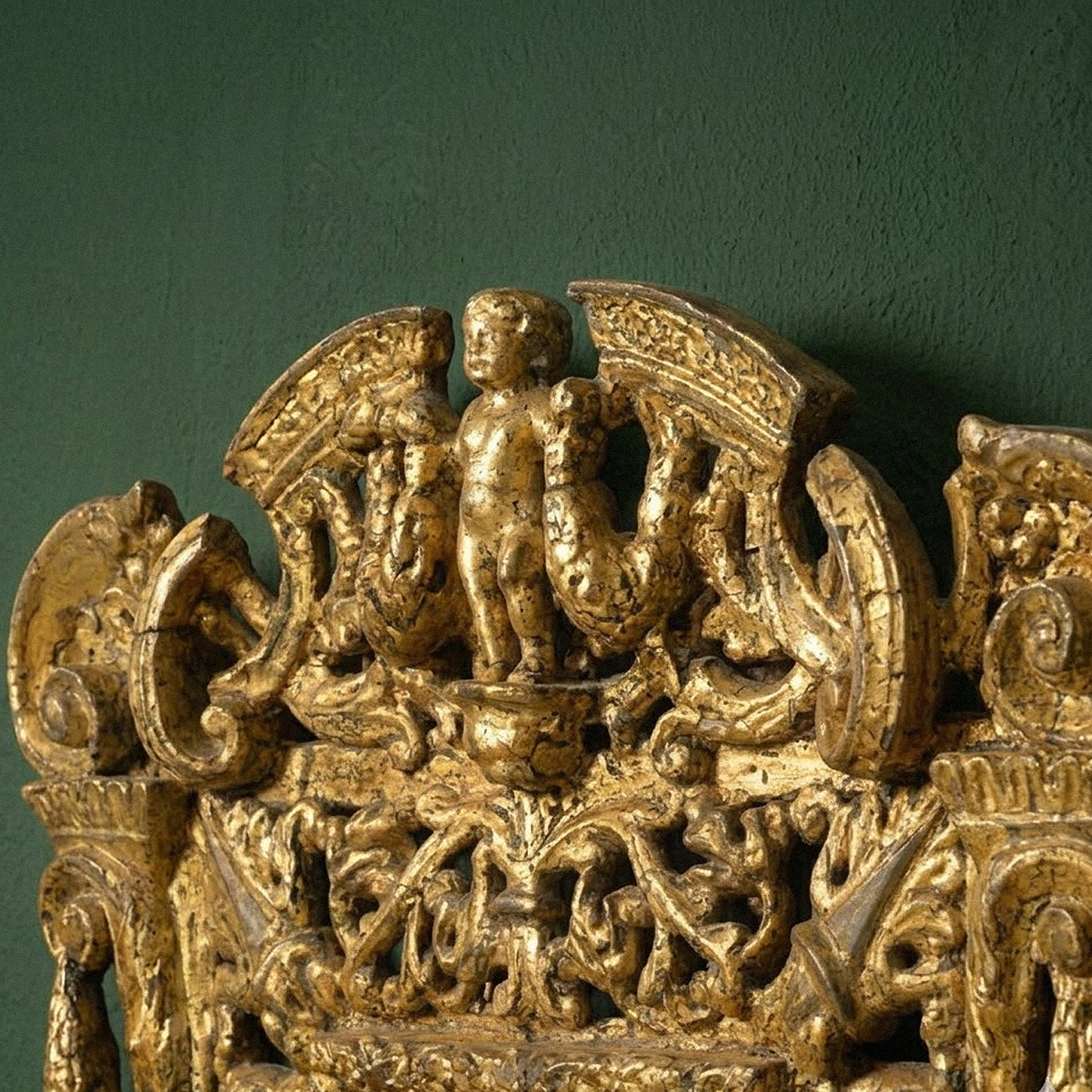
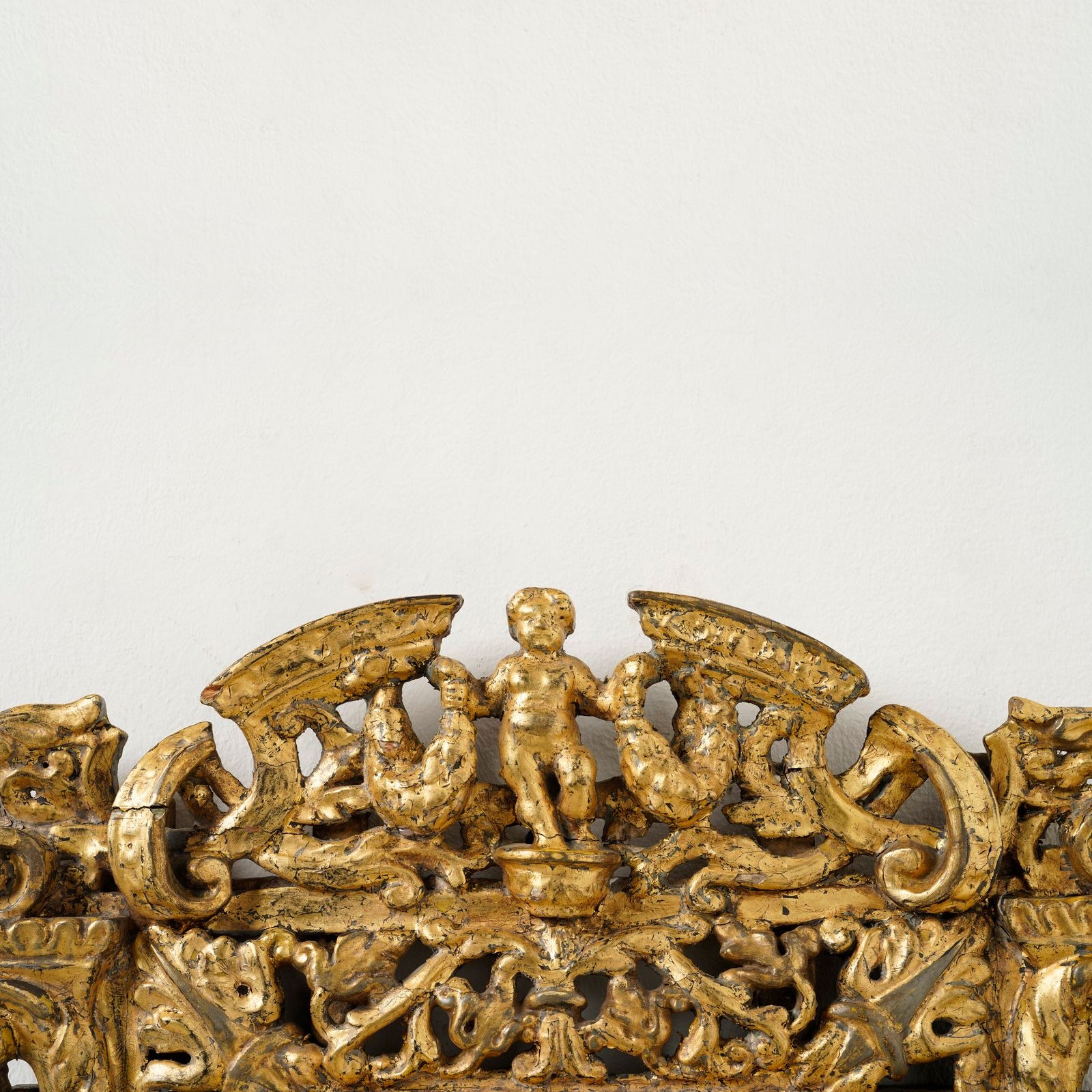
There is a profound elegance in the delicate interplay of light and shadow found only in masterfully carved, antique giltwood. This exceptional pair of 19th-century mirrors perfectly captures the exuberance of Old World craftsmanship, offering a rich, sculptural presence that transcends standard wall decor. Each frame is meticulously pierced and carved with scrolling leaf motifs, intricate tracery, and flanking putti, crowned by a prominent central putto resting upon the cymatium.
The antiqued, heavily foxed mirror plates soften the reflection, casting a warm, atmospheric glow that immediately grounds a room with a sense of historical gravity. For the discerning designer or collector, these mirrors provide a versatile yet dramatic statement—whether anchoring a grand entryway, flanking a mantelpiece, or adding layered depth to a thoughtfully curated interior.
Specifications:
Origin: Italy
Period: 19th Century
Style: Baroque Revival
Material: Hand-carved giltwood with antiqued mirror plates
Dimensions: 21.25" (h) x 18.3" (w) x 1.75" (d) in.
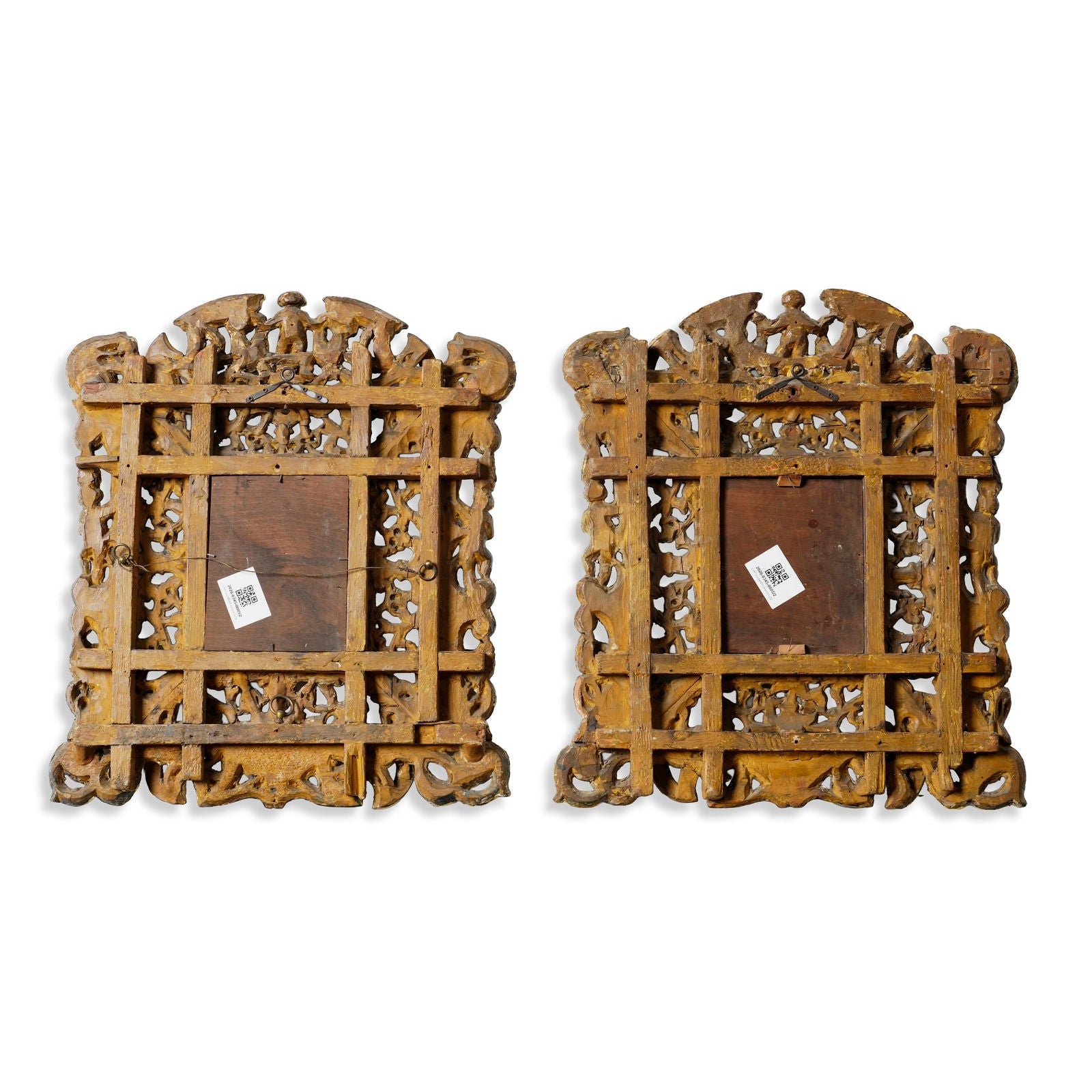
Condition: Excellent antique condition. The gilded surface exhibits a beautiful, warm patina with minor, expected wear that authenticates its age. The mirrored glass features heavy historical foxing and distress, integral to its antique character. The reverse shows traditional wooden lattice bracing.
Delivery: Tariff-free complimentary shipping within the USA is included in price. Please note, this item ships from our storage facility in Italy. Please allow 4-to-6 weeks for delivery (time required for us to secure the appropriate export license from the Italian Ministry of Culture).
Historian’s Note:
During the 19th century, European artisans frequently looked backward to the extravagant Baroque and Rococo periods of the 17th and 18th centuries for inspiration, creating a vigorous revival of deeply sculptural forms. The use of putti (cherubs) is a classical motif representing earthly joy and omnipresent in Renaissance and Baroque art. To achieve the lace-like, pierced carving (known as ajouré) seen in the intricate tracery of these frames required immense skill, as the carver had to remove significant portions of the wood while maintaining the overall structural integrity of the mirror.
Choose options