


A Florentine Awakening: A Pair of 18th-Century Serpentine Bedside Commodes
In the private villas of 18th-century Florence, furniture was crafted to embody the grace of the Italian Renaissance while embracing the softer, more intimate proportions of the late Baroque. This exceptional pair of serpentine bedside commodes, curated by Le Historique, serves as a captivating testament to that Florentine mastery of form.
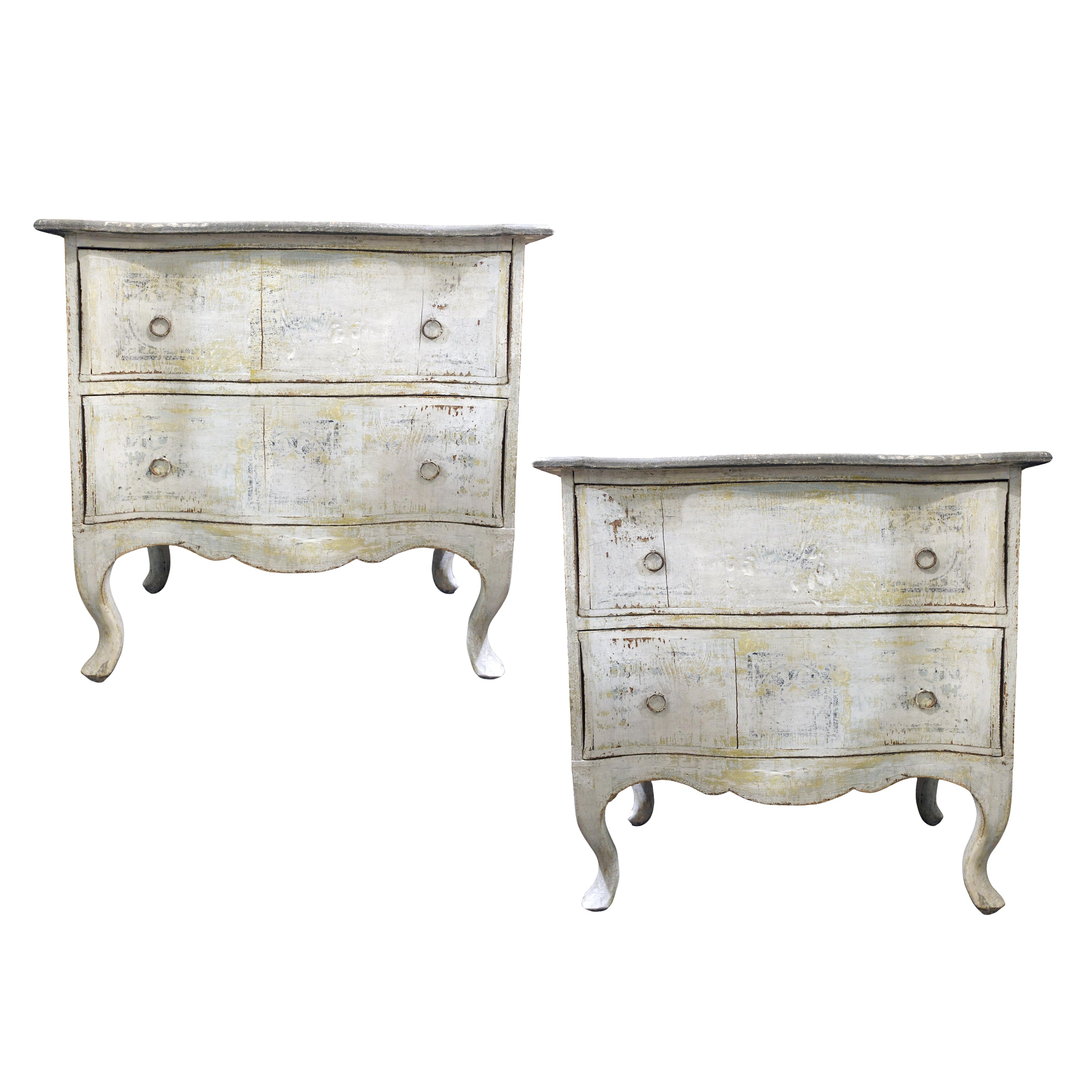
The silhouette is a triumph of movement; the rhythmic, serpentine fronts flow seamlessly into a curving apron and elegant cabriole legs. Their surfaces tell a story of centuries—a "living" patina where traces of an early mustard-toned pigment peek through layers of eggshell whites and soft creams. This multi-layered history is further enriched by faint, ethereal stenciling in charcoal-grey, whispering of the artisanal hands that first adorned them.
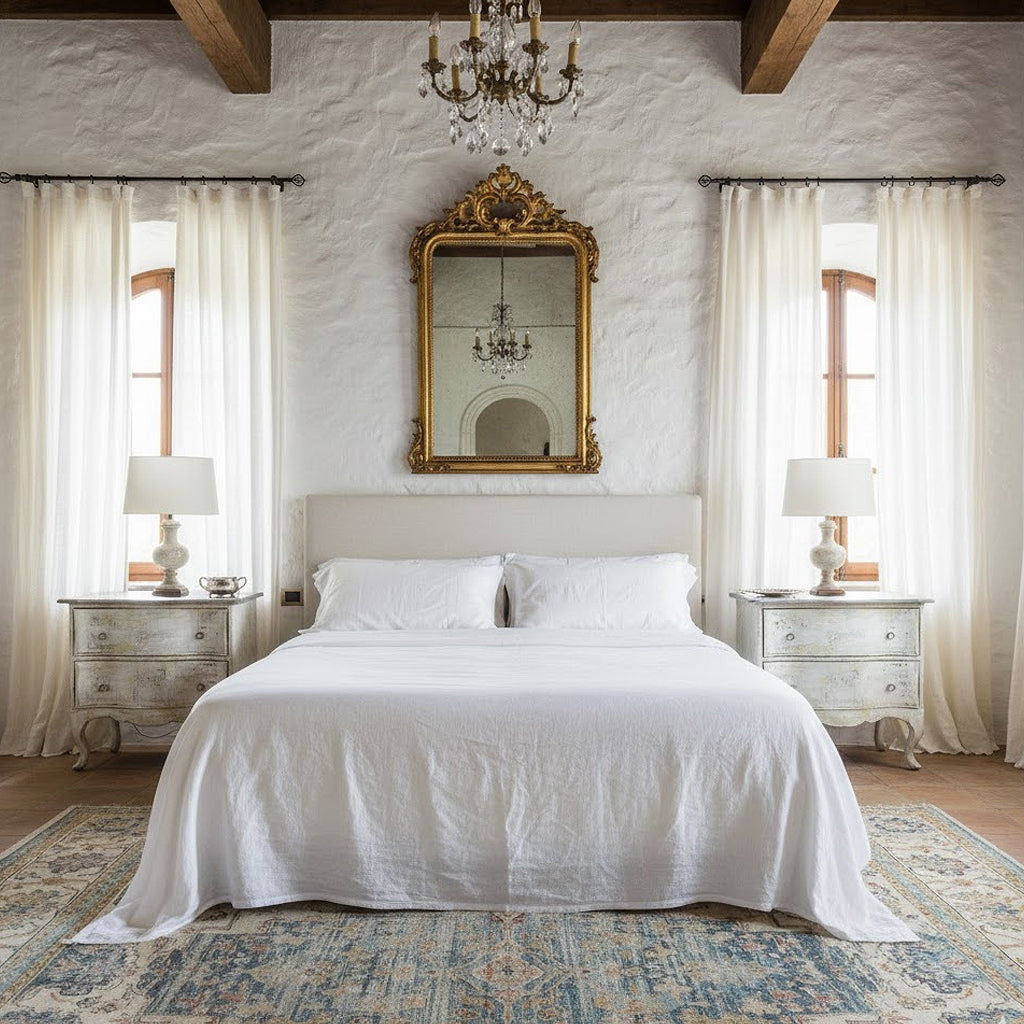
The tops, finished in a muted stone-blue, were designed to mimic the cool surfaces of Italian marble—a sophisticated "trompe l'oeil" characteristic of the period. Anchored by their original hand-forged iron ring pulls, these commodes offer more than just storage; they provide a storied, soulful presence to a curated bedroom or a grand salon. For the discerning designer, they represent the ultimate in "Old World" symmetry and continental charm.
Specifications:
Origin: Florence, Italy
Period: 18th Century (Circa 1750–1780)
Style: Florentine Serpentine / Late Italian Baroque
Material: Italian Stone Pine; Hand-Forged Iron Hardware; Multi-layered historical pigments
Dimensions: Approx. 35" (H) x 34" (W) x 17" (D) each
Condition: Antique Condition. Beautifully distressed with minor age-related fissures that certify their 200-year provenance. Structurally stable with original iron pulls.
Delivery: White-Glove Continental & International Shipping available. Please contact our concierge for a bespoke transit quote.
Historian’s Note:
During the mid-to-late 18th century, Florentine craftsmen excelled in the "Serpentine" style—a design language defined by its "S" curved fronts and sides. This was a response to the rigid linearity of earlier centuries, signaling a shift toward a more romantic and feminine interior aesthetic. The use of Stone Pine, a native Mediterranean timber, allowed for these delicate carvings while providing a porous surface perfect for the layered "tempera" style painting seen here. These commodes are particularly significant for their surviving original hardware and the "faux-stone" painted tops, which were a hallmark of Italian villas seeking to showcase grandeur through clever, artistic craftsmanship rather than heavy materials.
Choose options