


The Poetic Stillness of the North: A Pair of 19th-Century Swedish Gustavian Commodes
In the serene interiors of 19th-century Sweden, furniture was designed to capture and hold the pale, ethereal light of the North. This rare, matching pair of Gustavian commodes, offered by Le Historique, embodies that celebrated "quiet luxury"—a harmonious blend of Neoclassical structure and rustic warmth.
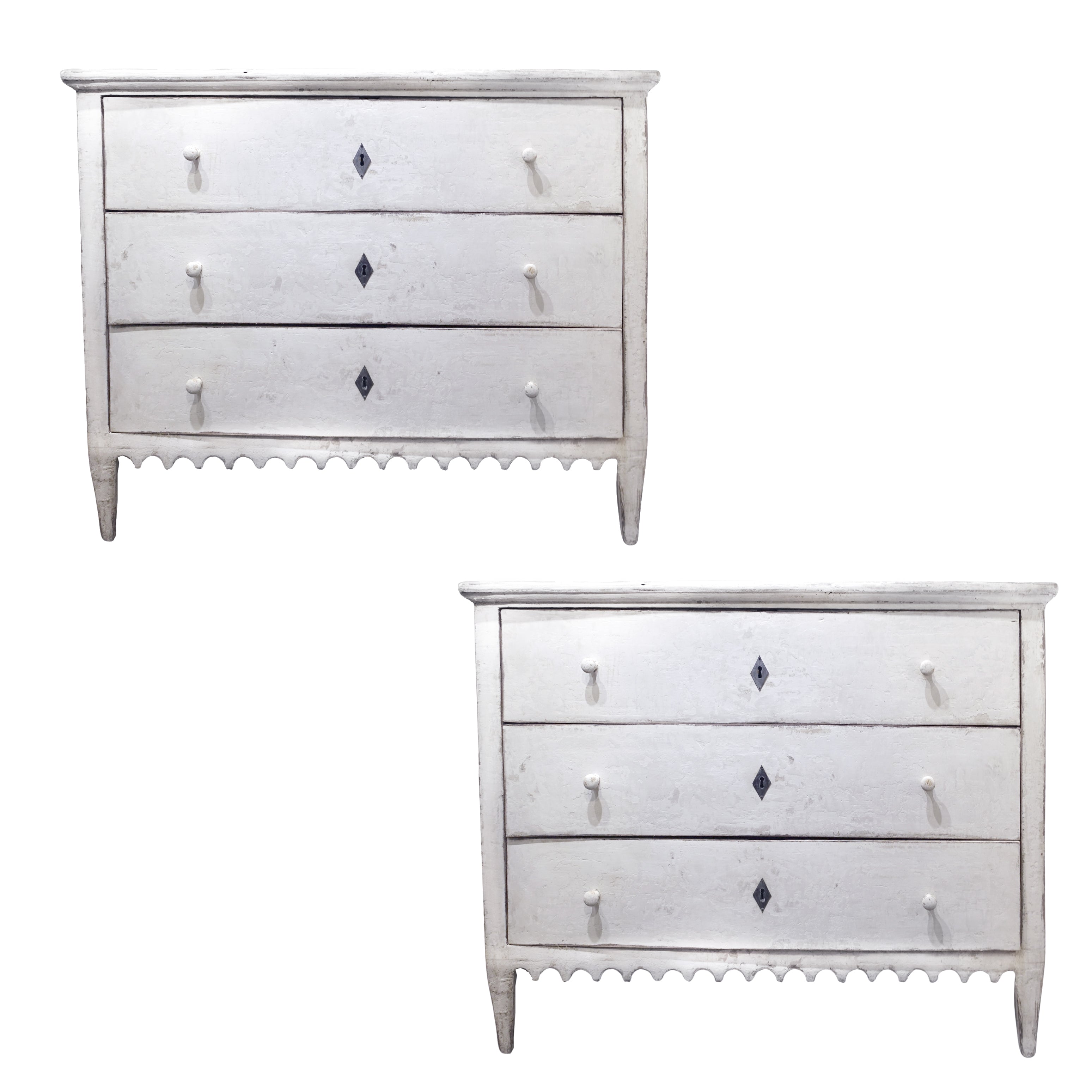
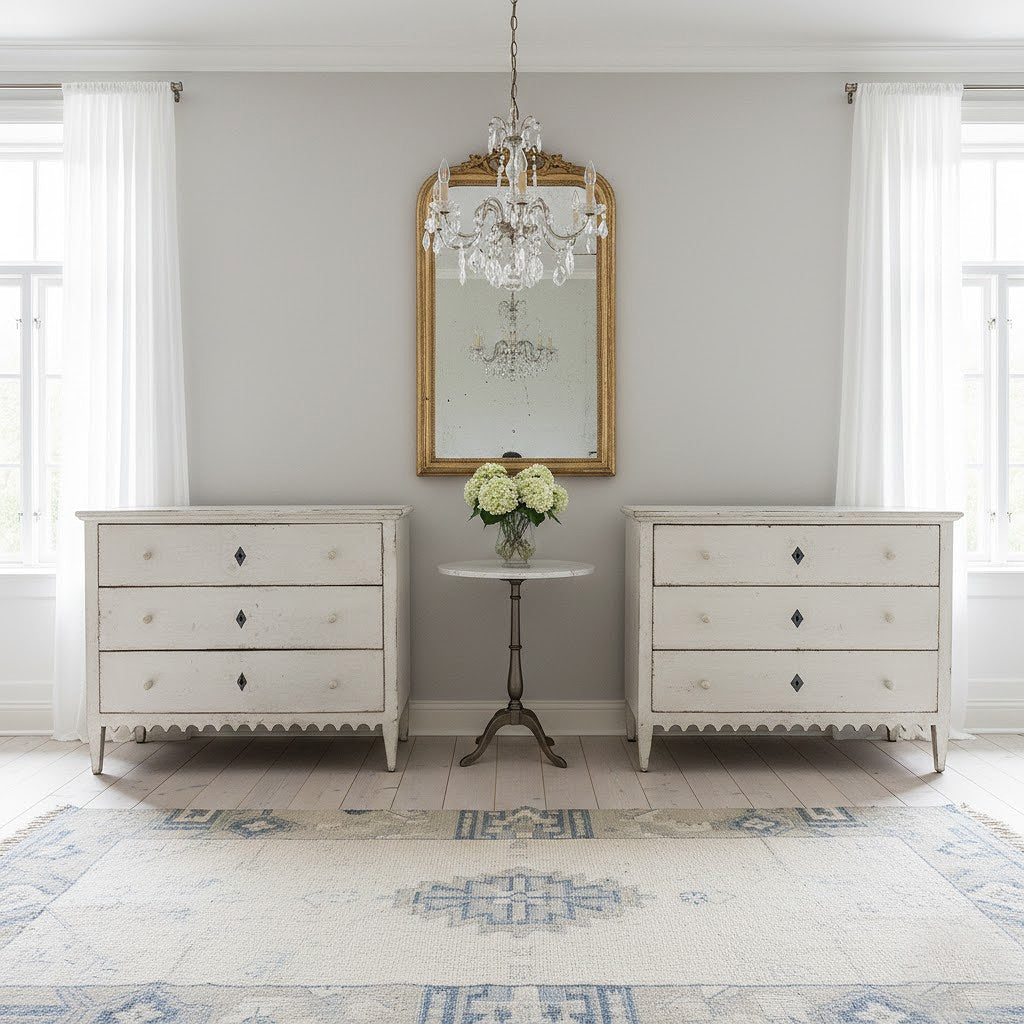
Each commode is a study in understated elegance. The three-drawer fronts are anchored by central, diamond-form iron lock plates, flanked by classic wooden knobs that invite a tactile connection to the past. What elevates this pair is the exquisite, hand-carved scalloped skirting that traces the base, adding a rhythmic, lyrical quality to their otherwise austere, tapered-leg silhouette.
The original painted finish has been lived in and cherished for over two centuries, resulting in a weathered patina that only time can curate. These are not merely storage pieces; they are architectural anchors. For the interior designer, they offer a mirrored symmetry perfect for flanking a grand fireplace or grounding a primary suite with historical soul. For the cultural collector, they represent the pinnacle of the Gustavian era’s commitment to form, light, and enduring utility.
Specifications:
Origin: Sweden
Period: Circa 1800
Style: Gustavian (Swedish Neoclassical)
Material: Hand-hewn Pinewood, Original Paint undercoat, Hand-forged Iron Lock Plates
Dimensions: Approx. 34" (H) x 44.5" (W) x 22" (D) each
Condition: Antique Condition. The pair retains a remarkably rich, antiquated patina with evidence of historical repainting over centuries. Overall stable, beautifully weathered, and commensurate with age.
Delivery: White-Glove Concierge Shipping. Please contact us for a tailored shipping quote to your residence or project site.
Historian’s Note:
The Gustavian style was born from King Gustav III’s fascination with the French court at Versailles, yet it was distilled through a uniquely Swedish lens of restraint and practicality. By 1800, the style had moved from the royal palace to the country manors of the Swedish landed gentry.
The painted finish of these commodes was culturally significant; it was a response to the long, dark winters. Lighter, painted surfaces reflected the minimal sunlight available, brightening the interior and creating the "airy" feel that defines Swedish design to this day. The diamond-shaped lock plates and scalloped details are quintessential regional hallmarks, signaling a transition from the heavy Baroque to a lighter, more enlightened European aesthetic. Owning a matching pair from this era is an increasing rarity, as these pieces were often separated over generations of inheritance.
Choose options