


The Color of the Tuscan Twilight: A Pair of Late 18th-Century Cerulean Cupboards
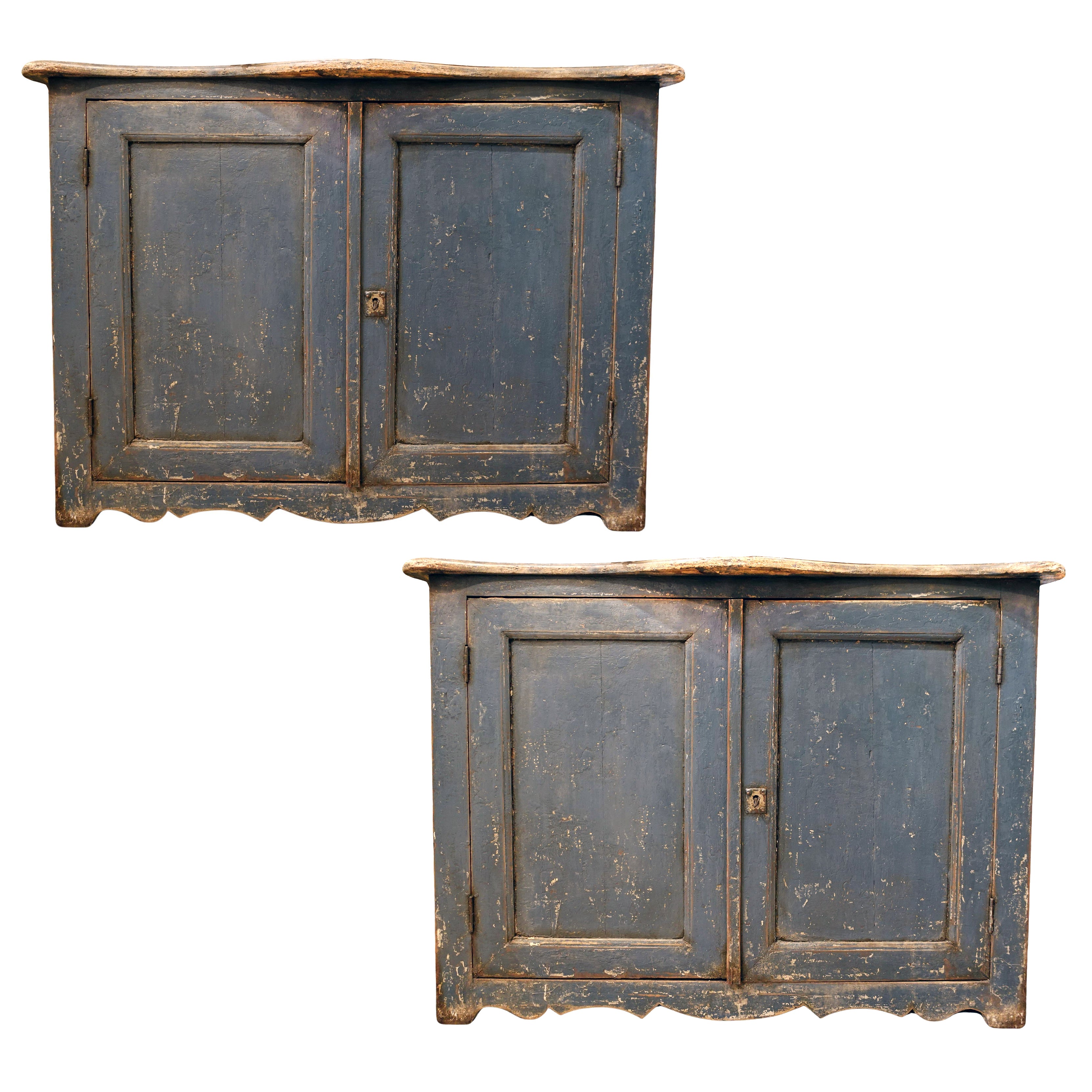
There is a specific, fleeting moment in the Italian evening when the sky yields its vibrant day-blue for a deep, chalky cerulean. It is this exact soul-stirring hue that defines this exceptional pair of late 18th-century cupboards. Sourced from the storied interiors of the Florence region, these pieces are not merely furniture; they are architectural remnants of an era that balanced Neoclassical restraint with the warmth of the Mediterranean sun.
The hand-applied pigment, mellowed by over two centuries of history, has transformed into a masterwork of natural patina. Where the paint has softened at the edges, the ghost of the original timber—likely pinewood or poplar—reveals itself, grounding the ethereal blue in organic honesty. Their silhouette is remarkably modern for the 1700s, featuring clean, paneled lines that eschew the frantic ornamentation of the Rococo in favor of a timeless, architectural poise.
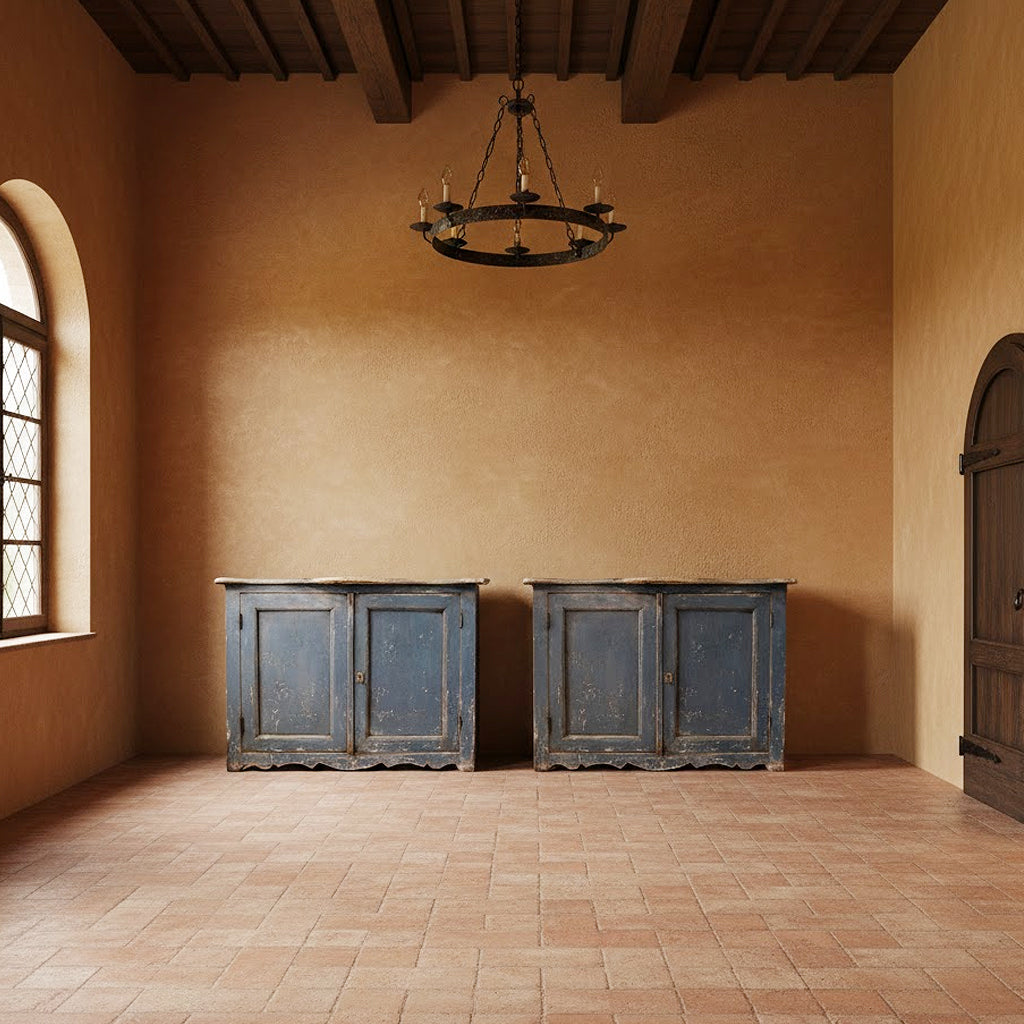
For the interior designer, these cupboards offer a rare symmetry and a foundational color story that can anchor a grand salon or a sophisticated primary suite. For the collector, they represent a tangible link to the artisanal heritage of Italy—a "second life" preserved for the discerning home.
Specifications:
Origin: Tuscany/Florence Region, Italy
Period: Late 18th Century (Circa 1780–1795)
Style: Italian Neoclassical / Refined Rustic
Material: Pinewood or Poplar; Original Hand-Applied Cerulean Pigment; Period Iron Hardware
Dimensions: 37 (h) x 48 (w) x 21 (d) in. each
Condition: Excellent Antique Condition. Features a sophisticated, naturally aged patina with scuffs and wear commensurate with 200+ years of use. Structurally stable with original doors and hardware.
Delivery: White-Glove Continental & International Shipping available. Please contact our concierge for a bespoke transit quote.
Historian’s Note:
In the late 1700s, the Italian "Casegoods" tradition underwent a radical transformation. As the Grand Tour brought northern European aristocrats through Italy, local craftsmen began blending rustic utility with the sophisticated Neoclassical ideals championed by architects like Andrea Palladio.
The use of Cerulean Blue during this period was a deliberate aesthetic choice. Blue pigments were historically expensive and difficult to stabilize; to see it used on a pair of functional cupboards suggests they were commissioned for a residence of significant standing—likely a rural villa or a noble townhouse. These pieces represent a moment in history where Italian design moved away from the gilded excess of the church and toward a "lived-in" elegance that prioritized harmony, proportion, and the evocative power of color.
Choose options