
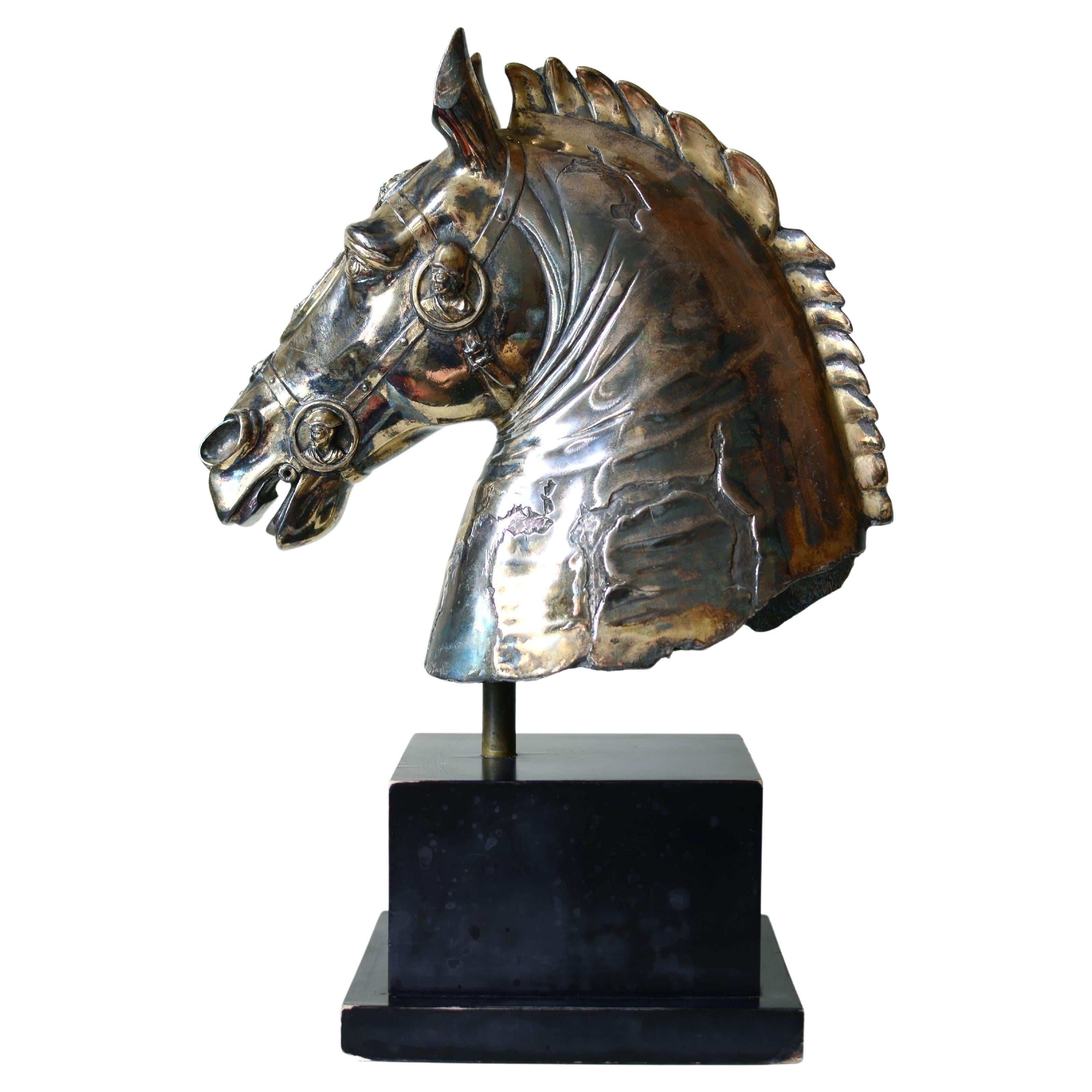
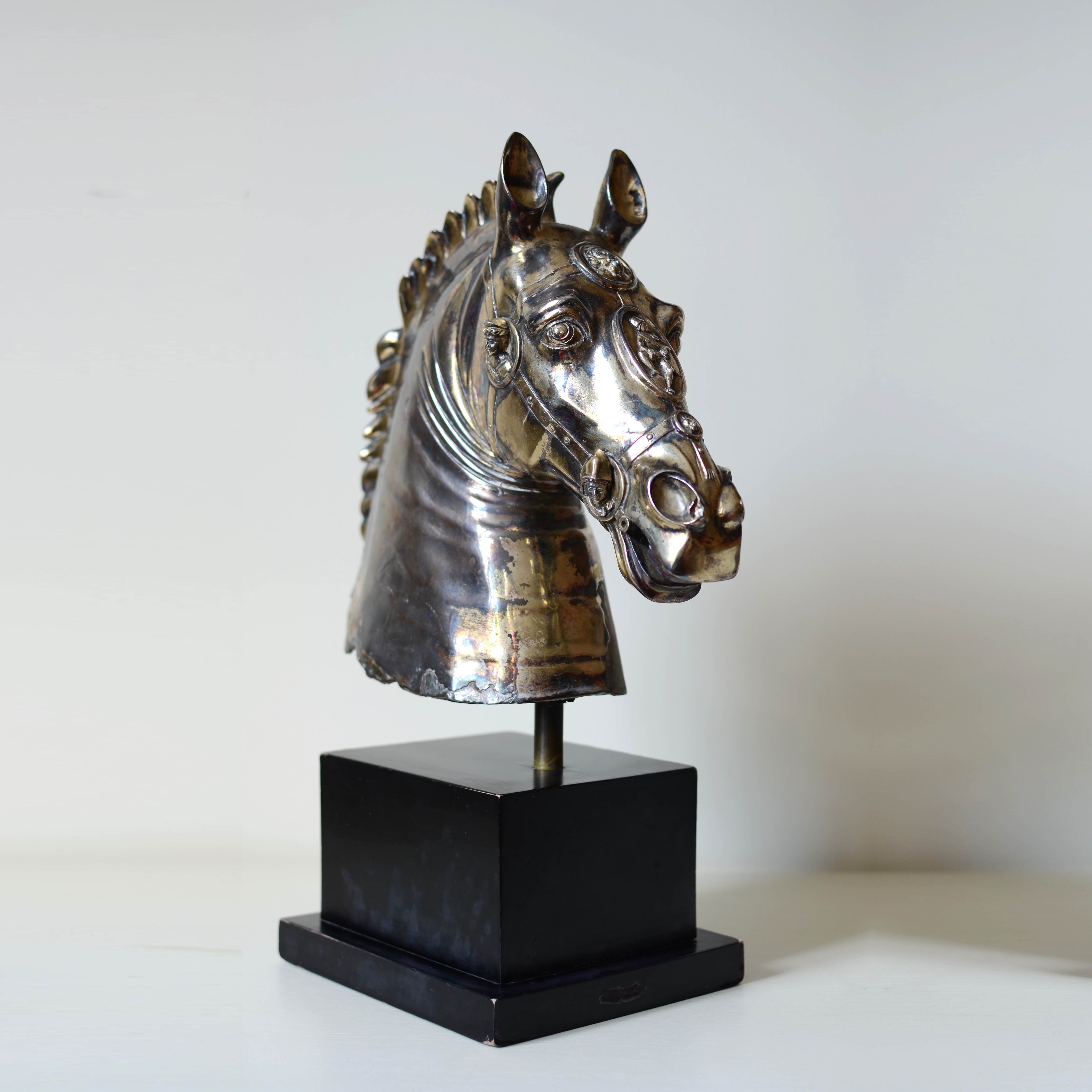


The Hellenic Stallion: A Vintage Silver-Plated Equestrian Bust After Classical Antiquity
There is a specific, untamed energy in the art of the ancient world—a moment where muscle, sinew, and spirit are captured in eternal stillness. This vintage equestrian bust, finished in a luminous silver plate, is a profound homage to that classical lineage. Inspired by the legendary marbles of the Parthenon and the monumental bronzes of the Roman Empire, this piece brings the grandeur of the "Great Age" into the contemporary sanctuary.
Every detail of this bust is a study in power and grace. The arched neck, the flared nostrils, and the meticulously rendered, flowing mane evoke the steeds of emperors and the sacred horses of Greek mythology. The silver plating has aged with a quiet dignity, developing a subtle patina that highlights the sculpture's deep contours and muscular definition.
Standing as a focal point of intellectual and aesthetic substance, this bust is more than an object of art; it is an anchor for a room’s character. Whether placed atop a mahogany desk in a private library or centered on a limestone mantel, it offers a sense of settled purpose and Old World continuity. It is a piece for the "quiet editor" of their own life—one who values the intersection of historical rigor and enduring beauty.
At Le Historique, we believe that true quality is never "in trend" because it never goes out of it. We specialize in sourcing artifacts of exceptional character—pieces that possess a soul and a documented past. This equestrian bust was hand-selected for its preservation of classical proportion and its ability to lend an air of timeless European provenance to the modern home.
Specifications:
Style: Neoclassical / Classical Antiquity
Era: Vintage (Mid-20th Century)
Material: Silver-Plated over Heavy Composite or Cast Metal
Dimensions: 14.5 (h) x 10 (w) 5.5 (d) in.
Condition: Excellent vintage condition; the silver plate shows an authentic, soft patina consistent with age and careful curation.
Historian’s Note:
The Cultural Significance of the Equestrian Image
The depiction of the horse in art has, for millennia, been the ultimate symbol of nobility, conquest, and the human triumph over nature. In Classical Antiquity, specifically within the Phidian sculptures of Greece and the Equestrian Statue of Marcus Aurelius in Rome, the horse was portrayed with a "divine realism"—balancing anatomical accuracy with a heroic, idealized spirit.
During the Grand Tour era of the 18th and 19th centuries, wealthy Europeans became obsessed with these classical forms, commissioning smaller-scale reproductions to serve as "reminders of virtue" in their private estates. This vintage bust continues that tradition, representing a 20th-century revival of the Neoclassical ideal. It serves as a bridge between the ancient workshops of the Mediterranean and the refined interiors of today, embodying the "permanence" that Le Historique champions.
Choose options